Types of UGC Videos: 62% Higher Conversions Explained
HotUGC
March 1, 2026 · 13 min read
Types of UGC Videos: 62% Higher Conversions Explained
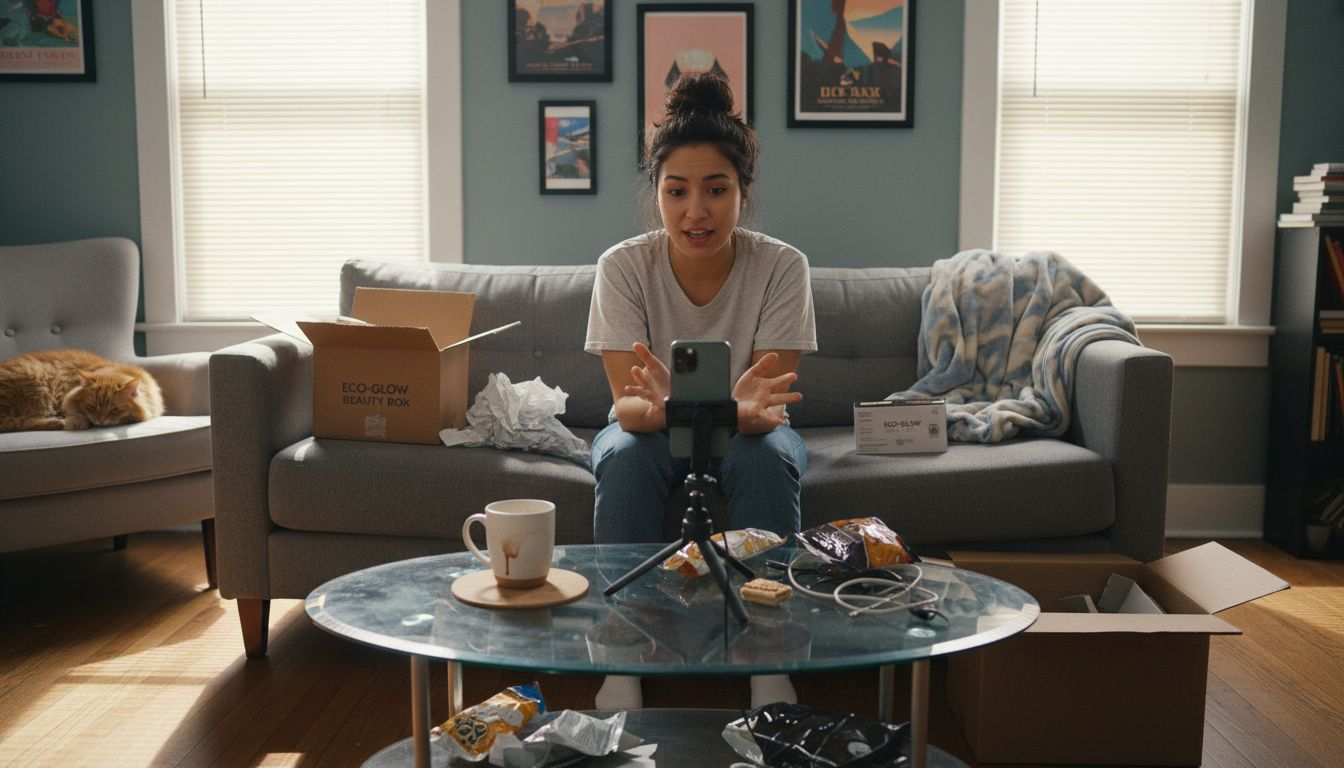
Choosing the right UGC video type isn’t guesswork. Your selection directly impacts conversion rates, engagement, and ROI. With seven distinct UGC video formats each delivering different results, understanding their strengths and ideal use cases becomes critical. This guide breaks down performance data, cost factors, and strategic criteria to help you pick the UGC video type that aligns with your brand goals and maximizes campaign effectiveness.
Table of Contents
- How To Choose The Right Type Of UGC Video For Your Brand
- 1. Testimonial And Review Videos
- 2. Unboxing Videos
- 3. How-To And Tutorial Videos
- 4. Influencer And Celebrity UGC Videos
- 5. Product Demonstration Videos
- 6. Challenge And Viral Trend Videos
- 7. Comparison: Traditional Vs AI-Generated UGC Videos
- Summary And Situational Recommendations
- Discover HotUGC: AI-Powered UGC Video Solutions
Key Takeaways
| Point | Details |
|---|---|
| Testimonial videos boost conversions | Authentic customer reviews increase conversion rates by 62% through trust building |
| Unboxing videos drive purchase intent | Real product unboxing experiences increase buyer intent by 20% |
| How-to videos cut returns significantly | Educational tutorials triple engagement and reduce product returns by 18% |
| Influencer UGC amplifies reach | Celebrity-hosted content raises CTR by 35% and brand awareness by 50% |
| AI-generated UGC transforms efficiency | Automated production slashes costs 80% and delivery time from weeks to minutes |
How to Choose the Right Type of UGC Video for Your Brand
Selecting the optimal UGC video format starts with defining your primary marketing objective. Are you focused on immediate conversions, brand awareness expansion, or customer education? Each UGC type excels in specific scenarios.
Your product complexity matters significantly. Technical products benefit from detailed how-to content, while lifestyle items perform better with unboxing and testimonial formats. Audience preferences vary by demographic too. Gen Z responds strongly to viral challenges, while older buyers trust testimonial reviews more.
Production logistics deserve careful consideration. Traditional UGC creation involves weeks of coordination, creator vetting, and editing. AI-generated UGC video production now offers scalable alternatives, cutting timelines to minutes while maintaining authenticity. Cost and speed become competitive advantages.
Platform requirements also shape your choice. TikTok favors fast-paced challenges and hooks, Instagram performs well with polished unboxing content, and Facebook converts strongly with product demonstrations. Understanding these benefits of UGC videos across channels informs smarter allocation.
Your decision framework should weigh five criteria: conversion impact based on funnel stage, production cost and timeline, engagement potential by platform, product category fit, and scalability for ongoing campaigns. Applying UGC ad frameworks systematically ensures consistent results across video types.
1. Testimonial and Review Videos
Testimonial videos feature real customers sharing honest experiences with your product. This format dominates conversion-focused campaigns because buyers trust peer recommendations over brand messaging. The authenticity of unscripted customer voices cuts through advertising skepticism.

Testimonial UGC videos can boost conversion rates by 62% compared to traditional ads. This performance stems from social proof psychology. When prospects see someone like themselves solving a problem with your product, purchase hesitation drops dramatically.
Key advantages of testimonial videos include:
- High trustworthiness from genuine customer perspectives
- Strong performance across Facebook, Instagram, and TikTok
- Lower production costs, especially with AI avatar options
- Effective at multiple funnel stages from consideration to decision
- Easy to scale by collecting diverse customer stories
Testimonials work best for products with clear before-and-after results or emotional benefits. Skincare, fitness, productivity tools, and problem-solving products see exceptional returns. The format excels when you need to overcome specific objections or build confidence in premium-priced offerings.
AI-driven testimonial videos now replicate authentic review styles without traditional filming. You maintain the conversion power of testimonials while controlling messaging, localization, and production speed. This approach proves particularly valuable when launching in new markets or testing multiple value propositions rapidly.
Pro Tip: Front-load your testimonials with the specific problem solved rather than generic praise. Viewers connect with struggle narratives before celebrating solutions.
2. Unboxing Videos
Unboxing videos capture the first-time product experience from package arrival through initial use. This format creates anticipation while demonstrating tangible product quality, packaging care, and immediate value. The visual journey builds emotional connection before purchase.
Research shows unboxing content increases purchase intent by 20% because it removes uncertainty about what buyers actually receive. The transparency of showing real packaging, included accessories, and product condition addresses common pre-purchase anxiety.
Unboxing video strengths include:
- Creates genuine excitement through discovery moments
- Showcases product presentation and perceived value
- Ideal for physical product launches and seasonal releases
- Performs exceptionally well on Instagram and YouTube
- Builds brand perception through packaging quality reveals
This format suits brands investing in premium packaging or multi-component products. Tech gadgets, subscription boxes, fashion items, and gift-worthy products gain significant advantage. Unboxing works best early in your campaign cycle when building awareness and consideration.
Moderate production complexity means you need creators with good lighting and steady filming skills. However, the content remains accessible for most UGC contributors. Planning unboxing video strategies around product highlights and key talking points ensures consistency across multiple creators.
Authenticity matters more than polish. Viewers expect real reactions, not scripted enthusiasm. The most effective unboxing videos balance genuine surprise with strategic feature mentions that address buyer questions.
3. How-To and Tutorial Videos
How-to videos educate customers on product usage, best practices, and creative applications. This content type transforms browsers into informed buyers while building post-purchase satisfaction. Educational value positions your brand as helpful rather than purely promotional.
Tutorial content triples engagement compared to standard product videos because viewers actively seek solutions. When your content solves their immediate problem, trust and authority compound. Even better, effective how-to videos reduce product returns up to 18% by setting proper expectations and preventing user error.
Tutorial video benefits include:
- Dramatically higher engagement from value-seeking viewers
- Reduces support costs by preemptively answering questions
- Critical for technical, complex, or multi-use products
- Builds long-term brand loyalty through helpful expertise
- Effective both pre-sale for education and post-sale for retention
How-to content excels for products requiring setup, technique, or non-obvious applications. Beauty products, cooking tools, software, fitness equipment, and hobby supplies all benefit significantly. The format works across the entire customer journey.
Production requires creators who understand your product deeply and can explain clearly. Script guidance ensures coverage of key features while maintaining natural delivery. Balancing educational depth with concise formatting keeps viewers engaged through completion.
Educational UGC content benefits extend beyond immediate conversions. Tutorial libraries become evergreen assets driving organic discovery through search. Each video serves multiple campaign objectives simultaneously.
Pro Tip: Structure tutorials with the end result first, then work backward through steps. Viewers stay engaged when they see the payoff upfront.
4. Influencer and Celebrity UGC Videos
Influencer-created UGC blends authentic review formats with expanded reach and perceived credibility. When recognizable personalities share genuine product experiences, their established audiences transfer trust to your brand. This approach accelerates awareness while maintaining UGC authenticity.
Influencer-hosted UGC videos achieve 35% higher click-through rates than non-influencer content. The performance lift stems from audience pre-qualification and stronger attention capture. Followers already trust the influencer’s recommendations, reducing skepticism barriers.
Influencer UGC advantages include:
- Lifts brand awareness by 50% through audience crossover
- Accelerates campaign scaling with built-in distribution
- Higher perceived credibility than unknown creators
- Effective for top-funnel brand building and launches
- Combines authentic format with strategic reach amplification
This format suits brands entering new markets, launching flagship products, or competing in crowded categories. The investment scales with influencer tier. Micro-influencers offer cost efficiency and niche targeting, while celebrity partnerships deliver mass awareness.
“Influencer UGC works because it’s recommendation marketing disguised as content. The audience doesn’t feel sold to, they feel included in a discovery.”
Partnering strategy matters significantly. Brief influencers on key messages but allow creative freedom. Overly scripted content loses the authenticity that makes UGC effective. Balance brand safety with genuine voice.
UGC influencer marketing insights show that ongoing partnerships outperform one-off posts. Repeated endorsements build cumulative credibility. Consider the Adweek influencer UGC study data when allocating budget between micro and macro creators.
5. Product Demonstration Videos
Product demonstration videos showcase features, benefits, and real-world performance in action. This format educates prospects through visual proof rather than claims. Seeing the product work removes doubt about capability and value delivery.
Demonstration content boosts conversions by 28% on Facebook and Instagram because it answers the critical question: “Will this actually work for me?” Visual evidence outperforms written descriptions for complex features or non-obvious benefits.
Product demo strengths include:
- Clearly showcases key features and functionality
- Educates buyers on practical benefits and use cases
- Strong fit for social platform ad placements
- Helps close sales for feature-rich or technical products
- Reduces post-purchase confusion and returns
This format works exceptionally well for products with impressive visual performance, innovative features, or problem-solving capabilities. Kitchen gadgets, cleaning products, tools, and tech accessories convert strongly with demonstrations. The seeing-is-believing factor drives immediate action.
Production focuses on clear feature visibility and real-world context. Show the product solving actual problems customers face. Avoid overly staged scenarios that feel disconnected from daily use. Authenticity maintains the UGC advantage even in demonstration format.
Product demo video examples reveal successful patterns. Lead with the problem, demonstrate the solution, and end with a clear result. Keep pacing dynamic to maintain attention through the full feature showcase.
6. Challenge and Viral Trend Videos
Challenge videos tap into social platform trends, memes, and viral formats to maximize organic reach and engagement. This UGC type prioritizes entertainment and shareability over direct selling. The brand integrates naturally into trending content formats.
Challenge content achieves 112% growth on TikTok engagement compared to standard brand videos. The explosive performance comes from algorithm favorability and user participation. When viewers recreate your challenge, each post multiplies reach exponentially.
Viral challenge benefits include:
- Massive engagement through likes, shares, and comments
- Encourages user-generated brand content at scale
- Targets Gen Z and younger millennials effectively
- Builds brand awareness through entertainment value
- Creates community and conversation around your brand
This format suits lifestyle brands, youth-focused products, and campaigns prioritizing buzz over immediate conversions. Success requires perfect trend timing. Jumping on trends too late kills effectiveness, while forcing mismatched trends damages authenticity.
Execution demands deep platform understanding and cultural awareness. What works on TikTok often fails on Instagram Reels despite format similarity. Monitor trending sounds, hashtags, and formats closely. Adapt quickly when opportunity emerges.
Viral challenge video tactics emphasize simplicity and replicability. Challenges that are too complex or require special props limit participation. The best challenges feel easy to join but impressive to execute.
7. Comparison: Traditional vs AI-Generated UGC Videos
Production method dramatically impacts cost, speed, and scalability. Traditional UGC requires recruiting creators, coordinating filming, reviewing submissions, and editing final assets. AI-generated alternatives compress this timeline from weeks to minutes while cutting costs up to 80%.
AI production eliminates creator coordination entirely. You input product details and messaging preferences, then generate multiple video variations instantly. This speed enables rapid testing of hooks, scripts, and angles impossible with traditional methods.
Key differences include:
- Traditional UGC costs range from $500 to $5,000 per video depending on creator tier
- AI-generated videos cost $20 to $100 per video with unlimited revisions
- Traditional timeline spans 2 to 6 weeks from brief to final asset
- AI timeline completes in 5 to 15 minutes from input to export
- Traditional offers authentic human connection and unique creator personality
- AI provides consistent quality, perfect localization, and infinite scalability
AI avatars increasingly match real creator retention rates as technology improves. Viewers respond to message quality and authenticity of the script more than production method. When the content solves their problem or addresses their need, format becomes secondary.
Localization represents a major AI advantage. Generate the same UGC video in 30+ languages without hiring international creators. This capability unlocks global expansion at local campaign costs.
Pro Tip: Use AI-generated UGC for rapid testing and scaling, then invest in traditional creator content for your highest-performing concepts. Blend approaches strategically.
Deciding between methods depends on budget, timeline, and authenticity requirements. Review the AI video ad production guide for detailed comparison frameworks. The AI avatars versus real creators decision ultimately balances practical constraints with brand positioning.
Summary and Situational Recommendations
Each UGC video type delivers distinct advantages depending on your marketing objectives and product category. Performance data reveals clear patterns for strategic selection.
| Video Type | Conversion Lift | Engagement Impact | Production Time | Best Use Case |
|---|---|---|---|---|
| Testimonial | 62% increase | Moderate | 2-4 weeks traditional / 10 min AI | Building trust and driving conversions |
| Unboxing | 20% intent boost | High | 1-3 weeks | Product launches and first impressions |
| How-To | 18% return reduction | Triple standard | 2-5 weeks | Complex products needing education |
| Influencer UGC | 35% CTR lift | Very High | 3-6 weeks | Scaling awareness and reach |
| Product Demo | 28% conversion boost | Moderate | 1-3 weeks | Feature-rich product explanation |
| Viral Challenge | 112% engagement growth | Extreme | Ongoing | Youth audience and buzz generation |
| AI-Generated | Comparable to traditional | Comparable | 5-15 minutes | Rapid testing and global scaling |
Your selection criteria should prioritize conversion impact when focused on bottom-funnel sales, engagement potential for awareness campaigns, and production efficiency when scaling across markets or testing creative concepts.
Practical recommendations by scenario: Choose testimonials when building consumer confidence in new or premium products. Deploy unboxing content for physical product launches requiring excitement and transparency. Invest in how-to videos for technical products with learning curves. Partner with influencers when entering competitive markets needing credibility shortcuts. Use product demonstrations for feature-heavy offerings requiring visual proof. Launch viral challenges for youth-focused brand building. Leverage AI-generated UGC when speed, cost, or localization constraints limit traditional production.
Multiple video types often work in combination. A comprehensive campaign might open with influencer UGC for awareness, follow with product demonstrations for consideration, and close with testimonials for conversion. Layer formats strategically across the funnel.
UGC video selection guidance emphasizes testing over assumptions. What works for competitors may underperform for your audience. Start with data-backed formats, then optimize based on your specific performance metrics.
Discover HotUGC: AI-Powered UGC Video Solutions
Ready to implement these UGC strategies without the traditional production hassles? HotUGC AI-generated UGC videos deliver authentic, high-converting video ads in minutes, not weeks. Our platform eliminates creator coordination, filming delays, and revision bottlenecks.
Leverage the same 6-Scene UGC Ad Framework used by top DTC brands to structure videos that convert. Generate testimonials, product demos, and educational content at scale. Test unlimited variations to discover your highest-performing concepts.
Understand why UGC outperforms polished ads and start producing authentic content that resonates with modern buyers. Cut costs 80% while maintaining the trust and authenticity that makes UGC effective.
Frequently Asked Questions
What type of UGC video converts best for e-commerce?
Testimonial and review videos consistently deliver the highest conversion rates, boosting sales by 62% through authentic social proof. Product demonstration videos follow closely with 28% conversion lifts, particularly effective for feature-rich items requiring visual explanation.
How quickly can I produce UGC videos with AI tools?
AI-powered platforms like HotUGC generate complete UGC-style videos in 5 to 15 minutes from initial input to final export. This speed enables same-day campaign launches and rapid creative testing impossible with traditional production timelines spanning weeks.
Do AI-generated UGC videos look authentic enough to perform well?
Modern AI avatars achieve viewer retention rates comparable to real creator content when paired with strong scripts addressing genuine customer needs. Audiences respond primarily to message relevance and value rather than production method, making AI-generated UGC effective for most campaign objectives.
Which social platform performs best for different UGC video types?
TikTok dominates for viral challenges and short-form engagement, Instagram excels with unboxing and lifestyle content, Facebook converts strongly with testimonials and product demonstrations, and YouTube performs best for in-depth how-to tutorials and educational content.
What legal considerations apply when using UGC videos in ads?
Secure explicit written permission from creators before using their content in paid advertising, clearly disclosing any compensation or free products provided. Include proper copyright attribution, respect platform-specific content policies, and maintain transparency about sponsored relationships to comply with FTC guidelines and avoid potential disputes.