
UGC production workflow explained: Scale e-commerce videos
HotUGC
March 17, 2026 · 10 min read
UGC production workflow explained: Scale e-commerce videos

Scaling user-generated content (UGC) video production feels chaotic and expensive for most e-commerce marketing managers. You know UGC videos drive conversions on social platforms, but the traditional approach of hiring creators, managing deliverables, and editing content creates unpredictable timelines and ballooning costs. What if you could transform UGC from an inconsistent tactic into a reliable, scalable marketing asset? This guide reveals the proven workflow that lets brands produce dozens of authentic UGC videos weekly without sacrificing quality or breaking budgets.
Table of Contents
- Why A Scalable UGC Production Workflow Matters
- Core Components Of An Efficient UGC Production Workflow
- Balancing Authenticity, Volume, And Brand Consistency In UGC
- Practical Steps To Implement A UGC Video Factory In Your E-Commerce Strategy
- Explore HotUGC For AI-Generated UGC Videos
- Explain UGC Production Workflow FAQ
Key takeaways
| Point | Details |
|---|---|
| Consistent production is essential | Social media algorithms demand frequent, authentic content to maintain visibility and engagement. |
| UGC factory approach scales output | Automated workflows generate 20-50 video variants weekly, supporting rapid testing and iteration. |
| AI integration streamlines creation | Chaining vision, language, and video AI models automates script generation, voiceovers, and visual packaging. |
| Balance authenticity with volume | Structured inputs preserve brand voice while mimicking creator-style authenticity at scale. |
| Iteration beats perfection | High-volume testing optimizes ad spend and identifies winning creative faster than polished campaigns. |
Why a scalable UGC production workflow matters
Social media algorithms reward brands that show up consistently with fresh, authentic content. When you post sporadically, your brand loses visibility and relevance as competitors flood feeds with engaging videos. Producing UGC ads consistently is crucial because social media content is ephemeral and brands need to appear every day to avoid being forgotten.
Most marketing managers face predictable pain points when scaling UGC. Creator content arrives late, off-brand, or unusable. Editing cycles drag on for weeks. Costs spiral when you need multiple variants for testing. Without a structured workflow, UGC feels like gambling rather than strategic marketing.
Establishing a repeatable production system transforms this chaos into predictability. You gain control over timelines, costs, and creative direction while maintaining the authentic look that makes UGC effective. Consistent output supports the rapid testing cycles modern performance marketing demands.
Consider these workflow benefits:
- Predictable delivery schedules replace creator uncertainty
- Cost per video drops dramatically at scale
- Brand consistency improves across all content
- Testing velocity accelerates campaign optimization
“The brands winning on social media treat UGC production like manufacturing, not art projects. They’ve industrialized creativity without losing authenticity.”
This systematic approach lets you produce enough creative variants to test hooks, scripts, and angles weekly. When you can generate 30 videos in the time traditional methods produce three, you discover winning formulas faster and maximize return on ad spend. The UGC advertising benefits compound when volume meets consistency.
Core components of an efficient UGC production workflow
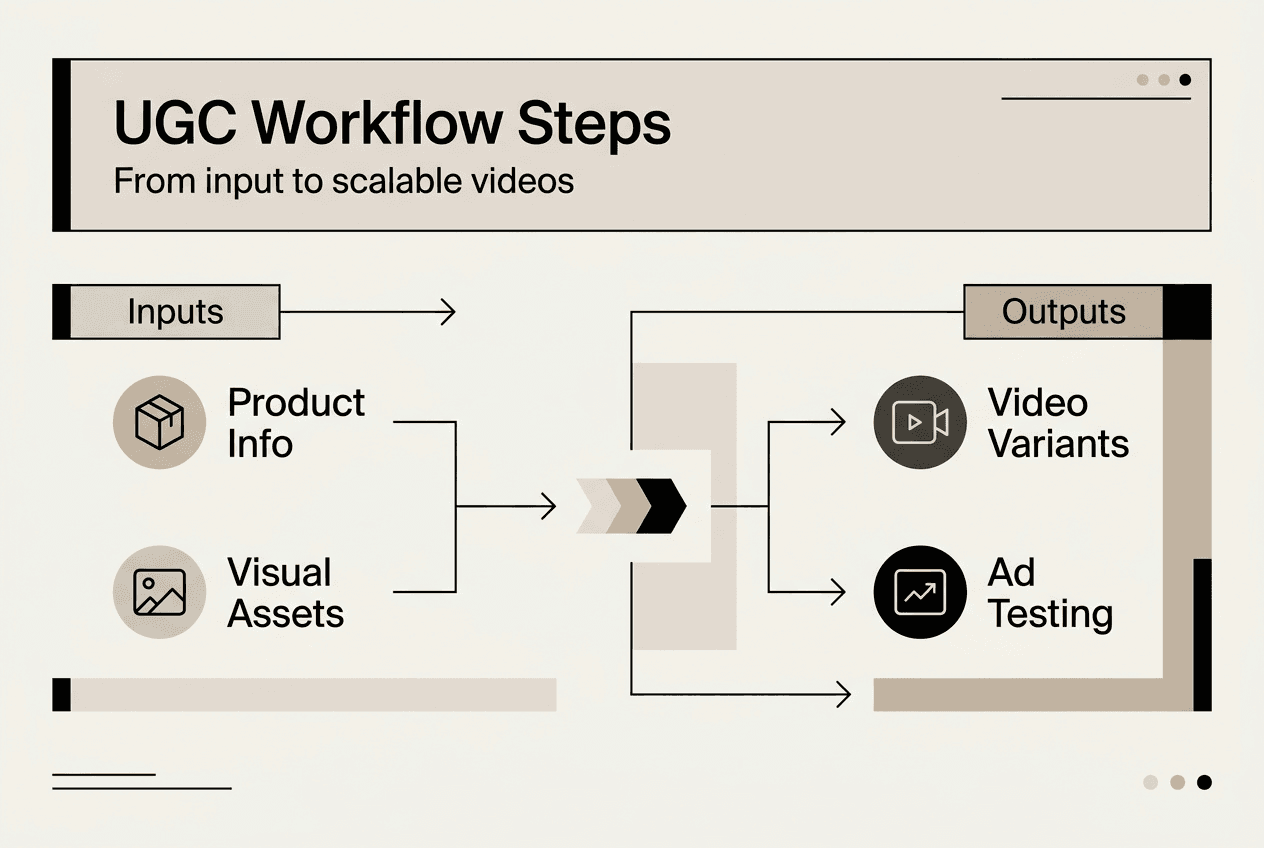
Every scalable UGC workflow starts with standardized inputs that feed automated systems. You need clear product visuals, concise value propositions, and defined target personas. These inputs ensure consistency while allowing creative variation across outputs.
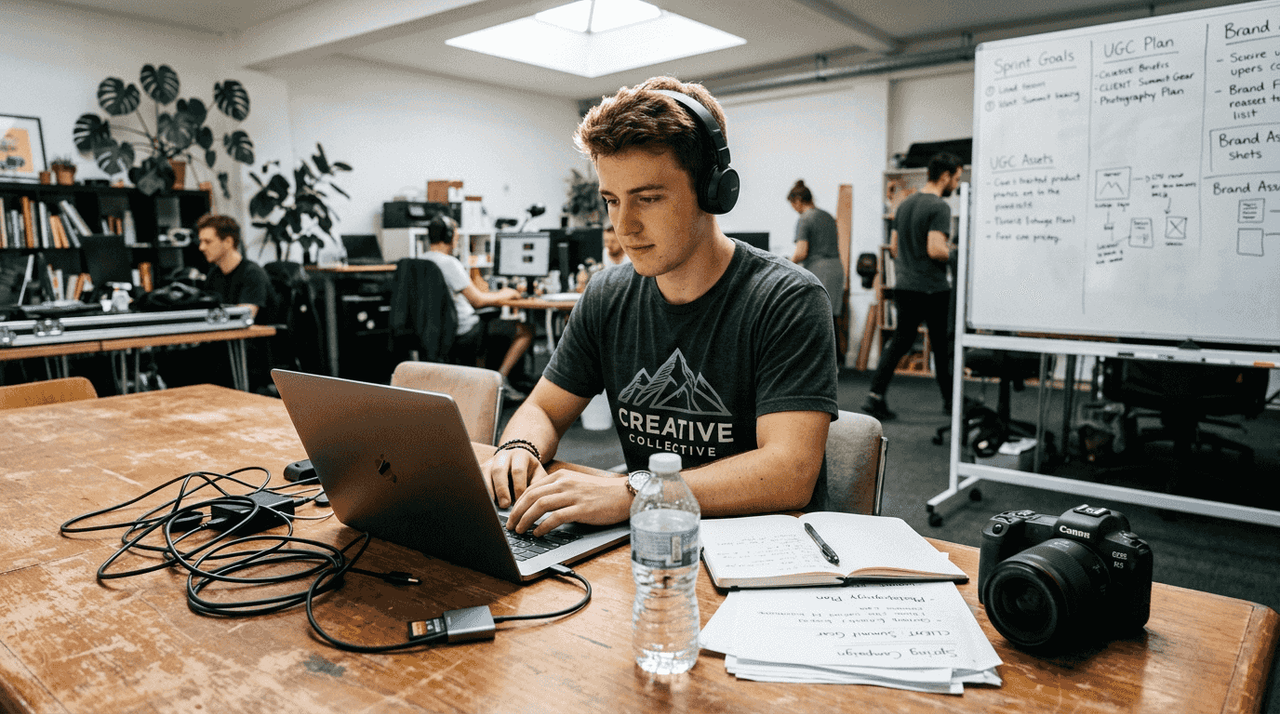
Automated script generation and voiceover creation form the workflow’s creative engine. A UGC factory includes inputs like target audience data, product images, and product names that feed AI systems producing diverse video variants. This automation eliminates the bottleneck of manual scriptwriting and talent coordination.
The technical backbone chains multiple AI models for complex tasks. Integrated systems use OpenAI Vision, Gemini 2.5 Flash, and Vertex AI Veo 3.1 with cloud storage for generated assets. Vision models analyze product images, language models craft conversion-optimized scripts, and video models combine elements into finished ads.
Here’s the typical production sequence:
- Upload product images and basic information to the system
- AI analyzes visuals and generates multiple script variations
- Voiceover synthesis creates natural-sounding audio tracks
- Video assembly combines scripts, voiceovers, and AI avatars
- Platform-specific formatting produces versions for TikTok, Instagram, and Facebook
- Cloud storage organizes assets for easy retrieval and testing
| Workflow Component | Purpose | Output |
|---|---|---|
| Product Input System | Standardize creative briefs | Consistent data for AI processing |
| Script Generator | Create conversion-focused narratives | 10-20 script variants per product |
| Voiceover Synthesis | Produce natural audio | Multiple voice options and tones |
| Video Assembly | Combine all elements | Platform-ready video files |
| Asset Management | Organize and track outputs | Searchable creative library |
Pro Tip: Build a reusable asset library of product shots, background clips, and music tracks. When AI systems can pull from pre-approved elements, you maintain brand consistency while accelerating production speed.
Final outputs include multiple aspect ratios optimized for each platform’s specifications. Vertical 9:16 videos dominate mobile feeds, while square 1:1 formats work across placements. This multi-format approach maximizes reach without additional creative work. Following video content best practices ensures each variant performs optimally on its target platform.
Balancing authenticity, volume, and brand consistency in UGC
Authenticity requires mimicking the imperfect visual language of real creator content. Consumers are blind to overly polished ads because authentic, creator-style UGC videos with natural lighting, shaky cameras, and conversational scripts achieve better trust and engagement. Your workflow must preserve these authenticity signals while operating at scale.
Volume combats the reality that social algorithms punish brands posting infrequently. You need fresh creative constantly to maintain visibility and test performance variations. Successful brands use programmatic creative approaches to generate dozens of hook, script, and avatar variations from single product URLs, maintaining volume without exploding costs.
Brand consistency seems to conflict with authentic UGC aesthetics, but structured inputs solve this tension. Define your brand voice in clear sentences that guide AI script generation. Specify approved product claims, tone guidelines, and messaging frameworks. The system then produces authentic-looking content that stays on-brand.
Consider how different content types serve complementary purposes:
| Content Type | Strengths | Best Use Cases |
|---|---|---|
| Authentic UGC | High trust, social proof, relatability | Top-of-funnel awareness, social engagement |
| Polished Brand Video | Professional credibility, detailed features | Product pages, email campaigns |
| AI-Generated UGC | Scalable, consistent, cost-effective | Paid social testing, high-volume campaigns |
The most effective strategies blend authentic UGC with professional brand-led videos to balance relatability and consistency. Your workflow should produce both types, deploying each where it performs best. Understanding why UGC outperforms polished ads in specific contexts helps you allocate creative resources strategically.
Testing many creative variants improves ad performance and media efficiency. When you can produce 50 videos weekly, you identify winning hooks and messaging angles faster than competitors testing three variations monthly. This velocity advantage compounds over time.
Pro Tip: Create a scoring rubric that rates each video on authenticity markers like casual speech patterns, natural pauses, and relatable scenarios. Even AI-generated content should hit these benchmarks to maintain UGC effectiveness.
The six-scene UGC ad framework provides structure without sacrificing authenticity. Apply proven frameworks to guide content creation while allowing natural variation in execution. This balance lets you scale production while preserving the creator-style feel that drives performance.
Practical steps to implement a UGC video factory in your e-commerce strategy
Start by defining clear input templates that standardize how product information enters your workflow. Create forms capturing product names, key benefits, target personas, and unique selling propositions. These structured inputs ensure AI systems generate on-brand content consistently.
Automate script and voiceover generation to accelerate variant production cycles. Successful UGC flows deliver 20-50 video variants weekly by combining organic customer posts and AI-generated assets while avoiding creative team burnout. Set up systems that generate multiple script variations from single product inputs, then synthesize voiceovers in different tones and styles.
Implement these workflow steps sequentially:
- Audit existing product assets and organize into cloud storage
- Define brand voice guidelines and messaging frameworks
- Select AI tools for script generation, voiceover synthesis, and video assembly
- Create input templates standardizing product information capture
- Build approval workflows balancing speed with quality control
- Establish testing protocols measuring creative performance
- Iterate based on performance data to optimize future outputs
Incorporate customer-generated content alongside AI assets for maximum authenticity. Real customer videos provide social proof that even sophisticated AI struggles to replicate. Your workflow should include processes for sourcing, rights management, and integration of organic UGC.
Set up cloud storage and asset management systems for efficient retrieval and testing. Organize videos by product, hook type, script angle, and performance metrics. When you can quickly find and deploy winning creative elements, you accelerate optimization cycles.
Key organizational practices:
- Tag videos with descriptive metadata for searchability
- Track performance metrics alongside creative attributes
- Archive underperforming variants to avoid retesting
- Maintain version control for iterative improvements
Measure creative testing needs based on your ad spend to optimize output volume sustainably. The key question marketers should ask is how much creative testing is needed to support their ad spend. Brands spending $50,000 monthly need more creative variants than those spending $5,000.
Pro Tip: Calculate your ideal creative refresh rate by dividing monthly ad spend by average cost per thousand impressions, then determine how many variants you need to avoid creative fatigue. This data-driven approach prevents both under-production and wasteful over-production.
Explore makeugc.ai alternatives and magicugc.com alternatives to find platforms matching your specific workflow requirements. Different tools excel at different aspects of UGC production, so evaluate options based on your volume needs, budget constraints, and technical capabilities.
Explore HotUGC for AI-generated UGC videos
Transforming UGC production from chaotic to systematic requires the right technology partner. HotUGC offers AI-powered tools that automate video creation personalized to your products, eliminating the unpredictability of traditional creator workflows. The platform generates realistic avatars, conversion-optimized scripts, and attention-grabbing hooks that mirror authentic creator content.
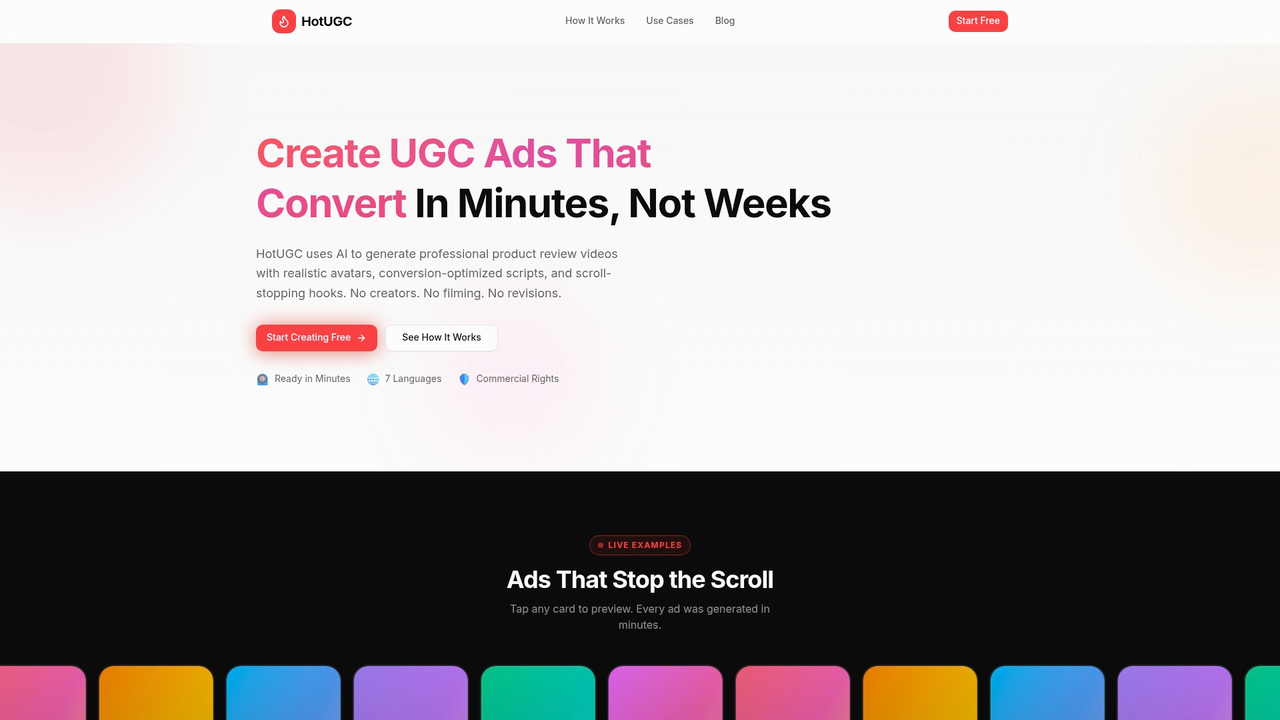
HotUGC supports multiple video formats, script variations, and persona-based customizations that align perfectly with programmatic creative workflows. You can produce dozens of testing variants weekly, maximizing ad performance while controlling costs. The platform integrates seamlessly into existing marketing stacks, streamlining creative budgets and accelerating time to market. Explore HotUGC’s AI-generated UGC videos to see how automated workflows transform your content production capacity and campaign results.
Explain UGC production workflow FAQ
What are the main steps in a UGC production workflow?
A scalable UGC workflow starts with standardized product inputs including images, value propositions, and target personas. AI systems then generate multiple script variations, synthesize voiceovers, and assemble videos with platform-specific formatting. Cloud storage organizes outputs for testing and deployment across social channels.
How do AI tools enhance scalability in UGC video production?
AI tools automate time-consuming tasks like scriptwriting, voiceover recording, and video editing that traditionally require human creators. By chaining vision models for image analysis, language models for script generation, and video models for assembly, systems produce dozens of variants weekly without proportional cost increases. This automation eliminates creative bottlenecks while maintaining quality.
How can brands maintain authenticity while automating content creation?
Authenticity comes from mimicking creator-style visual language like natural lighting, casual speech patterns, and relatable scenarios. Define clear brand voice guidelines that preserve your messaging while allowing AI systems to generate conversational scripts. Incorporate real customer testimonials alongside AI content, and score outputs against authenticity benchmarks before deployment.
What legal precautions should marketers take when using creator content?
Proper rights and permissions must be obtained from creators to avoid copyright issues when using their content. Establish clear usage agreements specifying platforms, duration, and compensation. For AI-generated content using creator likenesses, ensure your platform provides commercial rights. Maintain documentation of all permissions and regularly audit content libraries for compliance. Understanding the benefits of UGC videos includes knowing how to use them legally.
How much UGC video volume is ideal to support effective ad spend?
Video volume should scale with your advertising budget and testing needs. Brands spending $50,000 monthly typically need 40-60 creative variants to combat ad fatigue and identify winning formulas. Calculate your refresh rate by analyzing how quickly performance degrades on existing creative, then produce enough variants to maintain 3-5 fresh options weekly per campaign. Start conservatively and increase volume as you identify performance patterns.


