
Why use AI for content creation: boost ecommerce video ROI
HotUGC
March 14, 2026 · 11 min read
Why use AI for content creation: boost ecommerce video ROI

Video content drives ecommerce conversions at rates up to 7.9%, with top brands generating hundreds of thousands in revenue monthly through strategic video marketing. Yet traditional video production remains expensive, slow, and difficult to scale for most marketing teams. AI-generated video content solves these challenges by automating production workflows, cutting costs by up to 87%, and enabling rapid content iteration across multiple platforms. This article explores why AI video generation is transforming ecommerce marketing, comparing AI methods with traditional approaches, and providing actionable strategies to maximize engagement and conversion rates through intelligent automation.
Table of Contents
- Why AI Is Revolutionizing Ecommerce Content Creation
- Comparing AI-Generated Videos With Traditional And Human-Created Content
- Real-World Ecommerce Success Stories With AI-Generated Videos
- Best Practices For Integrating AI-Generated Video Content In Ecommerce Marketing
- Discover HotUGC’s AI-Generated Video Solutions For Ecommerce
Key takeaways
| Point | Details |
|---|---|
| AI videos boost conversions | AI-generated content increases engagement and conversion rates while reducing production costs significantly |
| Faster production cycles | AI automates video creation from weeks to hours, enabling rapid campaign launches and testing |
| Scalable content creation | Modular AI video workflows allow flexible reuse across multiple channels and audience segments |
| Proven revenue impact | Brands achieve up to 12% daily conversion rates and generate substantial revenue using video content |
| Quality meets efficiency | Modern AI models deliver competitive video quality while maintaining cost and speed advantages |
Why AI is revolutionizing ecommerce content creation
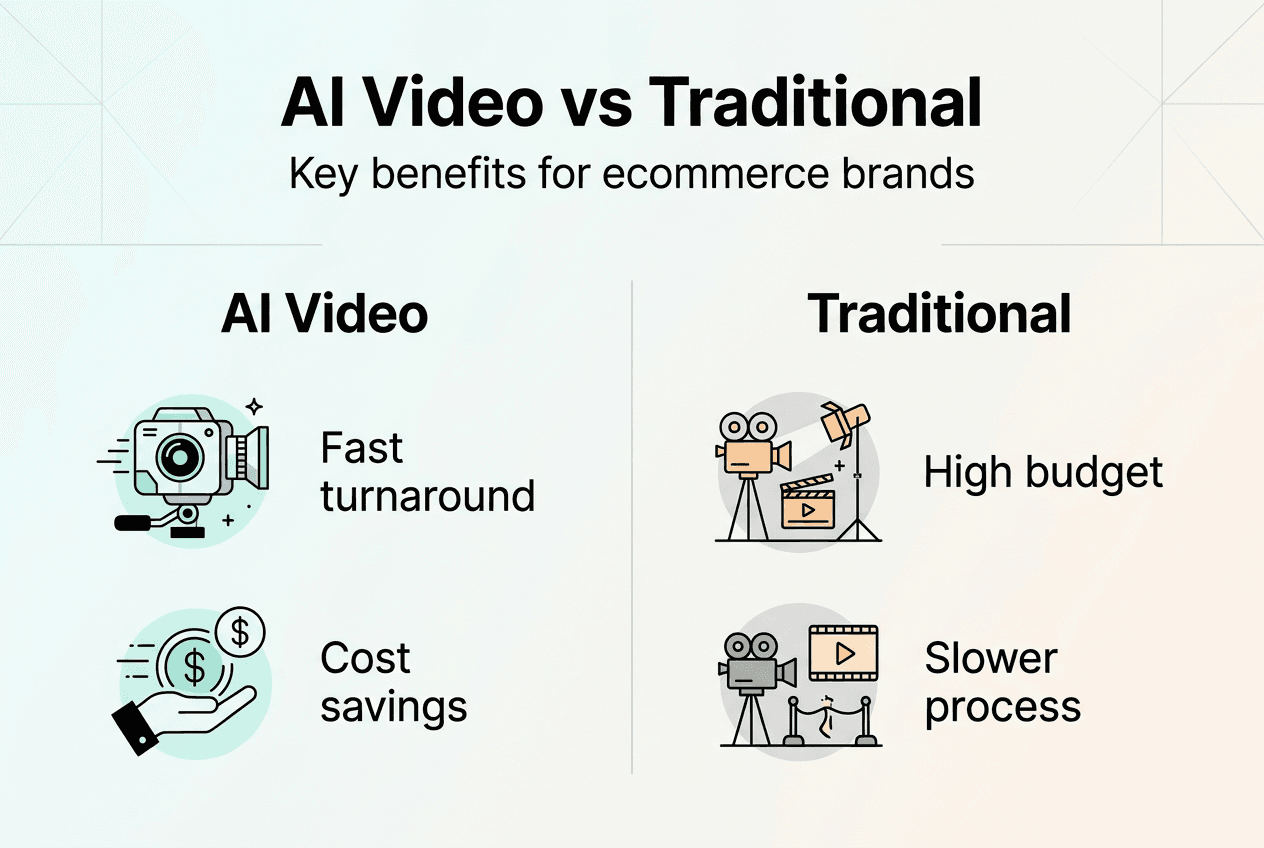
Traditional video production demands substantial budgets, extensive coordination, and weeks of turnaround time. Marketing teams face constant pressure to produce fresh content while managing limited resources and tight deadlines. These constraints force many ecommerce brands to choose between content volume and production quality, ultimately limiting their marketing reach.
AI-driven video generation enables ecommerce businesses to create dynamic product demonstrations, showcasing items from multiple angles and in various contexts without extensive physical photoshoots. This automation eliminates costly location scouting, equipment rentals, and crew coordination. Marketing teams redirect energy from production logistics to strategic planning and campaign optimization.
AI video tools generate versatile product demos digitally, displaying merchandise in diverse usage scenarios that would require multiple expensive shoots traditionally. A single product can appear in lifestyle settings, comparison demonstrations, and feature highlights without additional filming costs. This flexibility transforms how brands approach content calendars and campaign planning.
Content modularity powered by AI allows rapid reconfiguration for different platforms and audiences. The same base video adapts instantly for TikTok vertical formats, Instagram stories, or Facebook ads through automated resizing and editing. Marketers test multiple creative variations simultaneously, identifying top performers faster than traditional A/B testing cycles permit.
Pro Tip: Start with your highest-margin products when implementing AI video generation. Focus automation efforts where revenue impact justifies the learning curve, then expand to broader catalog coverage as workflows mature.
Key benefits of AI video automation include:
- Elimination of filming location and equipment costs
- Instant product showcasing across multiple scenarios
- Automated format adaptation for different social platforms
- Rapid creative testing and performance optimization
- Scalable content production without proportional cost increases
Following video content best practices ensures AI-generated videos maintain quality standards while maximizing efficiency gains. Strategic automation frees marketing teams to focus on audience insights, messaging refinement, and campaign strategy rather than production mechanics.
Comparing AI-generated videos with traditional and human-created content
Understanding performance differences between AI and traditional video production helps marketing managers make informed technology investments. Quality, cost, speed, and scalability vary significantly across production methods, each offering distinct advantages depending on campaign objectives and resource constraints.
MUG-V 10B matches recent state-of-the-art video generators overall and, on ecommerce-oriented video generation tasks, surpasses leading open-source baselines in human evaluations. This competitive quality level positions AI video tools as viable alternatives to traditional production for many commercial applications. Visual fidelity continues improving as models train on larger, more diverse datasets.
Cost advantages represent AI’s most compelling benefit for budget-conscious marketing teams. AI-generated images can significantly reduce product photography costs, cutting them by 87%, with similar savings extending to video production. Traditional shoots require crew payments, location fees, equipment rentals, and post-production editing that accumulate quickly across multiple projects.

| Production Method | Average Cost per Video | Typical Turnaround Time | Scalability |
|---|---|---|---|
| Traditional filming | $3,000 to $10,000+ | 2 to 6 weeks | Limited by budget and crew availability |
| AI-generated video | $50 to $500 | Hours to 2 days | Highly scalable with minimal incremental cost |
| Hybrid approach | $1,000 to $3,000 | 1 to 3 weeks | Moderate scalability with quality control |
Speed differences fundamentally alter campaign planning cycles. Traditional video production requires scripting, location scouting, filming coordination, and extensive editing before final delivery. AI models generate initial video drafts within hours, allowing marketers to iterate quickly based on performance data. This velocity enables real-time campaign adjustments impossible with traditional workflows.
Scalability challenges limit traditional video production regardless of budget size. Physical shoots require proportional resource increases for each additional video, constraining content volume. AI video generation scales efficiently through automated workflows, producing dozens of variations without corresponding cost multipliers. Marketing teams expand content libraries rapidly to serve diverse audience segments.
However, complex creative storytelling and authentic human emotional connection still favor traditional or hybrid approaches. AI excels at product demonstrations, feature explanations, and structured educational content. Nuanced brand narratives requiring subtle performance details benefit from human creativity combined with AI efficiency tools.
Pro Tip: Use AI for high-volume product showcases and A/B testing, reserving traditional production for flagship brand stories and campaigns requiring complex emotional resonance.
Learning to automate video ads for cost savings helps marketing managers identify optimal use cases for AI tools. Strategic technology adoption balances automation efficiency with creative quality requirements specific to each campaign objective.
Real-world ecommerce success stories with AI-generated videos
Data-backed case studies demonstrate how video content drives measurable revenue growth and conversion improvements for ecommerce brands. These examples provide concrete benchmarks for marketing managers evaluating video strategy investments and expected returns.
Travelpro generated $269k revenue in 30 days using video content with shoppers converting at 7.9% and up to 31% during peak season. Average watch times exceeded 3 minutes, indicating strong viewer engagement that correlates directly with purchase intent. Video carousels showcasing product features from multiple angles helped customers make confident buying decisions without physical store visits.
ALPAKA achieved up to 12% daily conversion rates with video content and a video carousel drove over €156K revenue in 3 months. User-generated video content built trust through authentic customer experiences, reducing purchase hesitation common in online shopping. Shoppable video hotspots enabled direct product purchases without leaving the video interface, streamlining the conversion path.
| Brand | Revenue Impact | Conversion Rate | Key Strategy |
|---|---|---|---|
| Travelpro | $269K in 30 days | 7.9% to 31% peak | Video carousels with multiple product angles |
| ALPAKA | €156K in 3 months | Up to 12% daily | User-generated content with shoppable hotspots |
These success metrics establish clear performance targets for ecommerce video marketing initiatives. High engagement watch times signal content relevance and quality that AI generation can replicate at scale. Video carousels and shoppable formats proven effective in these cases integrate seamlessly with AI-generated content workflows.
User-generated video content styles build authentic connections that traditional advertising struggles to achieve. AI video generation replicates UGC aesthetics while maintaining brand control and production consistency. This combination delivers authenticity benefits without relying on unpredictable creator partnerships or lengthy approval cycles.
Applying AI video generation to scale proven strategies like those used by Travelpro and ALPAKA enables smaller brands to compete with larger competitors. Marketing teams replicate successful video formats across entire product catalogs efficiently, testing variations to optimize conversion performance continuously.
Pro Tip: Track watch time metrics alongside conversion rates to identify which video formats hold attention longest. Use these insights to refine AI-generated content templates for maximum engagement impact.
Implementing strategies that drive ecommerce video ads conversion boost requires understanding what makes successful video content resonate with target audiences. These case studies provide actionable frameworks for structuring AI-generated video campaigns around proven engagement drivers.
Best practices for integrating AI-generated video content in ecommerce marketing
Successful AI video adoption requires strategic planning beyond simply generating content. Marketing managers must optimize workflows, maintain brand consistency, and measure performance to maximize ROI from AI video investments.
Plan modular AI video content for reuse across multiple campaigns and channels. Create base video assets that adapt easily to different platforms through automated resizing and format adjustments. This modular approach maximizes content value by serving diverse audience segments without redundant production efforts. Template libraries standardize brand presentation while allowing customization for specific campaign needs.
Ensure videos align with brand voice and authenticity through human editing and review processes. AI-generated drafts provide efficient starting points that benefit from creative refinement. Human editors add personality nuances, verify factual accuracy, and ensure messaging consistency with broader brand guidelines. This hybrid workflow combines AI efficiency with human quality control.
Prioritizing site speed and user experience is crucial when integrating video content. Optimize video file sizes through compression without sacrificing visual quality. Implement lazy loading to prevent videos from slowing initial page renders. Fast-loading videos maintain positive user experiences that support conversion goals rather than creating frustration.
Leverage data-driven insights to test formats such as video carousels and shoppable hotspots for conversion gains. A/B testing reveals which video styles, lengths, and interactive elements resonate most with specific audience segments. AI generation enables rapid testing of multiple creative variations simultaneously, accelerating optimization cycles compared to traditional production constraints.
Continuously monitor ROI and iterate content using real campaign performance metrics. Track conversion rates, watch times, click-through rates, and revenue attribution to identify top-performing video assets. Use these insights to refine AI generation parameters and content strategies. Regular performance reviews ensure video investments deliver measurable business results.
Pro Tip: Create a performance dashboard tracking video metrics across all channels. Use this centralized view to identify patterns in successful content and replicate winning elements in future AI-generated videos.
Key implementation steps include:
- Develop modular video templates adaptable to multiple platforms
- Establish human review processes for brand consistency
- Optimize video delivery for fast loading and smooth playback
- Implement comprehensive A/B testing across video formats
- Build performance tracking systems measuring ROI metrics
Exploring comprehensive guidance on AI video ads guide 2026 provides additional strategic frameworks for marketing managers. Learning from examples like the GlowLab AI UGC case study demonstrates practical application of these best practices in real ecommerce contexts.
Discover HotUGC’s AI-generated video solutions for ecommerce
Transforming video marketing strategy requires tools designed specifically for ecommerce performance and scalability. Generic video platforms lack the specialized features marketing managers need to drive conversions efficiently.
HotUGC provides AI-powered tools designed specifically for scalable ecommerce video ad creation. Their platform generates user-generated content style videos proven to boost conversion rates significantly, combining authentic presentation with professional quality control. Marketing teams produce campaign-ready videos in minutes rather than weeks, accelerating time-to-market for new product launches and seasonal promotions.

HotUGC solutions help cut production costs while maintaining quality standards that drive engagement and conversions. Multi-language support enables global campaign deployment without separate production workflows for each market. Customizable avatars and scripts ensure brand consistency across all generated content while allowing creative flexibility for different audience segments.
Explore HotUGC to transform your video marketing with AI innovation tailored for ecommerce success. Their platform delivers the scalability, efficiency, and performance optimization capabilities modern marketing teams require to compete effectively in video-first digital environments.
FAQ
What is AI-generated video content?
AI-generated video content uses artificial intelligence algorithms to automatically produce videos from text prompts, images, or templates without manual filming or editing. This technology analyzes input parameters and generates visual sequences, animations, and transitions that match specified requirements. Ecommerce marketers use AI video generation to create product demonstrations, advertisements, and educational content at scale.
How does AI improve ecommerce video marketing results?
AI videos increase engagement through dynamic, relevant content that adapts to viewer preferences and platform requirements. Brands achieve conversion rates up to 12% daily using strategic video content combined with shoppable features and authentic presentation styles. Rapid content iteration enabled by AI allows marketers to optimize ads based on real-time consumer behavior data, continuously improving performance.
What challenges should marketers expect when adopting AI video tools?
Training large-scale video generation models is challenging due to cross-modal text-video alignment, long sequences, and complex spatiotemporal dependencies that impact content quality. Marketers must invest time learning platform capabilities and establishing quality control workflows. Balancing AI automation with human editing maintains brand authenticity and emotional appeal that purely automated content may lack. Technical limitations in handling complex creative storytelling require hybrid approaches combining AI efficiency with human creativity.
How can I ensure AI-generated video content aligns with my brand voice?
Use human editors to review and refine AI-generated scripts, visuals, and messaging for brand consistency. Develop detailed brand guidelines specifying tone, visual style, and messaging priorities that inform AI generation parameters. Human editing makes content authentic and improves credibility aligning with quality standards audiences expect. Test content performance regularly with target audiences to ensure resonance, adjusting AI generation templates based on feedback and engagement metrics.


