
UGC video basics: a guide for e-commerce marketers
HotUGC
March 28, 2026 · 9 min read
UGC video basics: a guide for e-commerce marketers

Polished studio ads used to be the gold standard. But the data tells a different story: authentic UGC outperforms traditional studio and influencer content in trust, engagement, and conversions. Marketing managers who still believe high production budgets equal better results are leaving serious revenue on the table. The surge in AI-powered tools has made it possible for lean e-commerce teams to produce high-quality, authentic-looking video ads at scale, without hiring a film crew or waiting weeks for deliverables. This guide covers everything you need to know: what UGC video is, why it works, which formats drive results, how to build a production pipeline, and how to use automation to stay ahead.
Table of Contents
- What is UGC video and why does it matter?
- Types of UGC video: Real examples for e-commerce
- The UGC video process: How to source, create, and secure rights
- AI and automation: Scaling UGC video efficiently
- Best practices and next steps for e-commerce success
- Efficient UGC video creation with HotUGC
- Frequently asked questions
Key Takeaways
| Point | Details |
|---|---|
| Authenticity drives results | Genuine UGC videos from real customers outperform polished ads and build trust. |
| Hybrid approach scales best | Mixing customer, creator, and AI-generated content provides speed and variety. |
| Secure usage rights | Always secure formal rights to content to avoid legal and brand risk. |
| AI multiplies content velocity | AI tools streamline production and make large-scale UGC video campaigns feasible. |
What is UGC video and why does it matter?
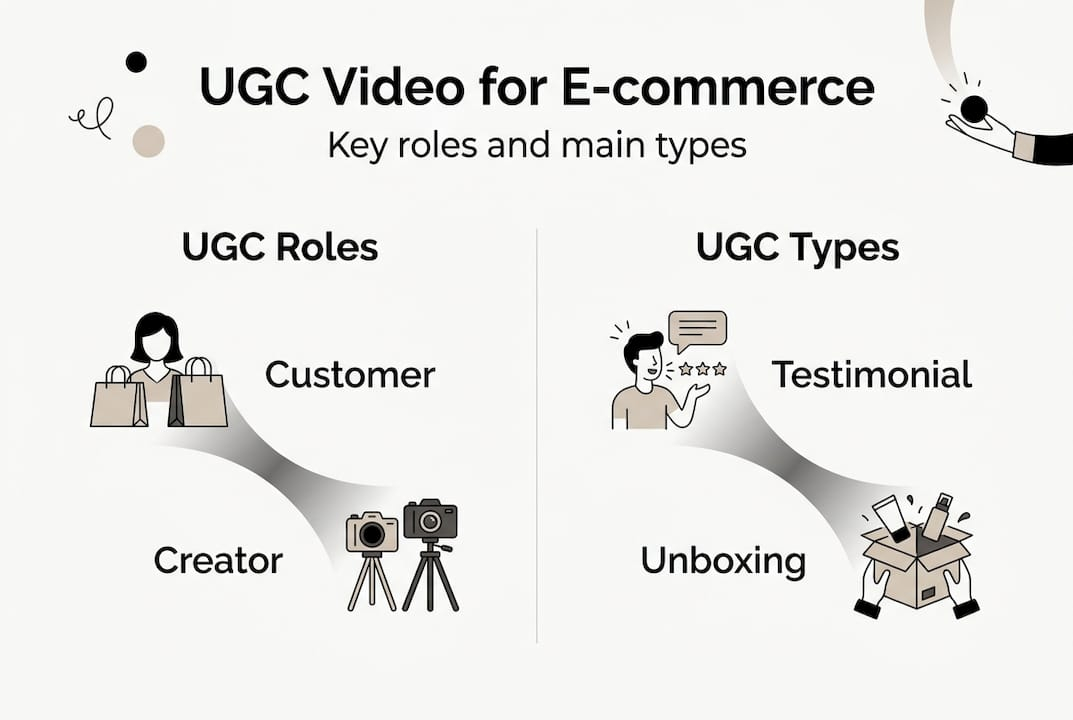
UGC video, short for user-generated content video, is any video created by real people rather than a brand’s internal production team. Think customer reviews filmed on a smartphone, unboxing clips posted to TikTok, or staff demonstrations shot in a warehouse. The defining quality is authenticity. Viewers can tell the difference between a scripted brand message and a genuine person sharing their experience, and they respond accordingly.
Contrast this with influencer or studio production. Those formats involve professional lighting, scripted dialogue, and polished editing. They look great, but they often feel distant. UGC feels like a recommendation from a friend, which is exactly why it converts.
Here is what makes UGC video so effective for e-commerce:
- Trust signal: Real people talking about real products build credibility faster than any brand tagline.
- Cost efficiency: Customer-generated content costs a fraction of studio production.
- Engagement lift: Brands leveraging authentic UGC see significant lifts in engagement and trust across social platforms.
- Conversion impact: UGC-driven campaigns can deliver up to 4x the conversion rate of standard brand ads.
- Scalability: With the right system, you can generate dozens of UGC-style videos per week.
“The most effective video ads in 2026 are not the most expensive ones. They are the most believable ones.”
Always secure usage rights before publishing any customer content in paid campaigns. This is a legal requirement, not a suggestion. Explore the full range of UGC video formats and understand the UGC ad benefits before building your strategy.
Types of UGC video: Real examples for e-commerce
Now that you know why UGC works, let’s look at the forms it can take and which deliver the best results for your business.
| Format | Who creates it | Ease of production | Typical result |
|---|---|---|---|
| Testimonial | Customer or creator | Medium | High trust, strong conversions |
| Product review | Customer or micro-creator | Easy | SEO value, purchase confidence |
| Unboxing | Customer or creator | Easy | High shareability, excitement |
| Demo/tutorial | Staff or creator | Medium | Reduces purchase hesitation |
| AI-generated UGC | AI platform | Very easy | Fast scale, consistent quality |
Different UGC formats drive different outcomes, and the right mix depends on your product category and campaign goal. A skincare brand benefits enormously from before-and-after testimonials. A gadget brand thrives on unboxing and demo content.
Strengths and weaknesses by format:
- Testimonials: High emotional impact, but require willing customers and rights management.
- Reviews: Great for SEO and trust, but can be inconsistent in quality.
- Unboxings: Highly shareable and exciting, but only relevant at the purchase moment.
- Demos: Reduce hesitation and returns, but need a knowledgeable presenter.
- AI-generated: Fast and scalable, but require authentic input data to feel genuine.
Pro Tip: A shaky, authentic clip filmed on a customer’s phone can outperform a $5,000 studio shoot if it feels relatable. Relatability is the conversion driver, not production value. Browse top UGC content formats to see which formats are trending in 2026, and review a proven UGC production workflow to understand how to operationalize each type.
The UGC video process: How to source, create, and secure rights
Now that you have seen the range of UGC types, the next step is knowing how to build a pipeline for ongoing content at scale.
Here is a step-by-step process that works for most e-commerce teams:
- Source from customers. Send post-purchase emails asking for video reviews. Offer a discount or loyalty points as an incentive. Keep the ask simple: a 30-second clip on their phone is enough.
- Engage paid micro-creators. Platforms like TikTok Creator Marketplace connect you with creators who specialize in authentic-style content. Brief them clearly on tone, not script.
- Use AI tools for speed. AI platforms can generate UGC-style videos using realistic avatars and optimized scripts. This is ideal for rapid campaign iteration and A/B testing.
- Edit for platform. Trim to the right length for each platform. TikTok and Instagram Reels favor 15 to 30 seconds. Facebook allows slightly longer formats.
- Secure usage rights. Before any content goes live in a paid campaign, get written permission from the creator. Use a simple digital release form.
The hybrid UGC approach combining real customers for authenticity, creators for polish, and AI for speed scales fastest and delivers the best balance of trust and volume.

Pro Tip: Build rights management into your intake process from day one. Retroactively chasing permissions after a campaign launches is expensive, slow, and sometimes impossible. Use a standardized release form and store approvals in a shared asset library. Review the full UGC video workflow to set up a system that protects your brand.
Common pitfalls to avoid:
- Skipping rights management and facing takedowns mid-campaign.
- Briefing creators too tightly, which kills authenticity.
- Failing to quality-check AI-generated content before publishing.
AI and automation: Scaling UGC video efficiently
With larger campaigns, manual UGC creation is not always sustainable. Here is how technology helps you scale without losing impact.
AI-powered solutions can automate editing, voiceovers, captioning, and even creator synthesis using realistic digital avatars. What used to take a production team two weeks can now be completed in under an hour.
| Factor | Traditional UGC production | AI-driven UGC production |
|---|---|---|
| Speed | Days to weeks | Minutes to hours |
| Cost per video | $200 to $2,000+ | $5 to $50 |
| Scale | Limited by creator availability | Virtually unlimited |
| Authenticity | High (real people) | Medium (requires real input data) |
| Consistency | Variable | High |
Top benefits of AI-powered UGC:
- Speed: Generate 10 testimonial variants for A/B testing in minutes, not weeks.
- Cost reduction: Cut production costs by up to 90% compared to hiring creators.
- Consistency: Every video follows your brand guidelines and conversion-optimized script structure.
Two caveats to keep in mind:
- AI-generated content still needs authentic product data, real reviews, and genuine claims to resonate.
- Over-reliance on AI without any real customer input can erode trust over time.
A practical example: an e-commerce brand launching a new supplement can use an AI platform to generate 10 different testimonial-style videos, each with a different hook, avatar, and script angle, then run them as paid social ads simultaneously. The winning variant gets scaled. This kind of rapid campaign iteration is simply not possible with traditional production. Check UGC ads performance stats to benchmark what results are realistic for your category.
Best practices and next steps for e-commerce success
With a toolkit of formats, processes, and technology at your disposal, use these strategic tips to drive real growth with UGC video.
Must-dos for UGC success:
- Plan strategically. Map UGC formats to specific funnel stages. Testimonials close deals. Unboxings build excitement at the top of the funnel.
- Champion authenticity. Even when using AI, ground your content in real customer language, real product benefits, and genuine claims.
- Measure and test. Run A/B tests on hooks, formats, and avatars. Let data decide what scales.
- Automate rights management. Use digital release forms and asset management tools from the start.
- Optimize continuously. Review video ad best practices regularly and refresh creative every four to six weeks to avoid ad fatigue.
Stat callout: Authentic UGC improves conversion rates significantly compared to standard ads, with some brands reporting lifts of 4x or more when replacing polished brand creative with genuine customer video content.
Three actionable next steps you can take this week:
- Audit your current assets. Identify any existing customer reviews, social mentions, or staff demos that could be repurposed as UGC video ads.
- Pilot a hybrid campaign. Combine one or two real customer clips with AI-generated variants and run them against your current best-performing ad.
- Test an AI UGC platform. Most platforms offer a free trial or demo. Use it to generate five to ten video variants and measure click-through rate against your baseline.
Consistent testing and creative experimentation are what separate brands that plateau from those that keep scaling.
Efficient UGC video creation with HotUGC
If you are ready to elevate your UGC strategy with less manual effort, HotUGC is built exactly for this. The AI-generated UGC video platform lets you produce professional-quality, conversion-optimized video ads in minutes using realistic avatars, custom scripts, and attention-grabbing hooks, without filming a single frame or hiring a creator.

HotUGC handles the full production cycle: script generation, avatar customization, multi-language support, and commercial usage rights included. Whether you are launching a new product, scaling a winning ad, or testing 20 creative variants at once, the platform fits directly into a scalable UGC workflow. Start your first project today and see how fast high-quality UGC video can move from idea to live campaign.
Frequently asked questions
What qualifies as a UGC video for e-commerce marketing?
Any video created by real users, customers, micro-influencers, or staff showcasing authentic experiences with your product counts as UGC. UGC videos come from real people, not hired actors or brand production teams.
Can AI-generated videos still be considered UGC?
AI tools can replicate the style and feel of authentic UGC, but genuine input from real customers always delivers more trust and engagement. Hybrid UGC combining customer content with AI and creators achieves the best balance of speed and authenticity.
How do I make sure I have legal rights to use UGC videos in ads?
Always secure formal written usage rights from creators before publishing their content in paid campaigns. Securing content rights is mandatory for brand safety and campaign continuity.
What is the quickest way to build a scalable UGC video library?
Combine content from satisfied customers, paid micro-creators, and AI platforms for fast, diverse production at scale. Hybrid UGC scales fastest and gives you the widest range of creative assets in the shortest time.

