
Why short-form video ads work: boost engagement
HotUGC
March 25, 2026 · 12 min read
Why short-form video ads work: boost engagement

Short-form video ads are rewriting the rules of digital advertising. While traditional formats struggle to capture attention, these bite-sized videos deliver 2.5 times higher engagement rates than long-form content. E-commerce marketers face a critical choice: adapt to the psychological triggers driving this shift or watch competitors dominate social feeds. This article unpacks the neuroscience behind short-form video effectiveness, reveals which content characteristics drive purchase intent, and provides actionable strategies to maximize your ad performance across platforms like TikTok, Instagram, and YouTube Shorts.
Table of Contents
- Key takeaways
- The psychology behind short-form video engagement
- Content characteristics that drive trust and purchase intent in short-form ads
- Leveraging trends and formats to maximize short-form ad engagement
- When to avoid short-form ads and strategies for sustained success
- Enhance your short-form video ads with HotUGC
- Frequently asked questions
Key Takeaways
| Point | Details |
|---|---|
| Higher engagement vs long form | Short-form videos deliver 2.5 times higher engagement than long form content, signaling a shift in how marketers must capture attention. |
| Immediate gratification drives attention | Short-form formats provide rapid dopamine hits through motion and sound that reward quick viewing and sustain interest. |
| Two second hooks | Create hooks that grab attention in the first two seconds to prevent early scrolling. |
| Authenticity sweet spot | The effects of authenticity follow a sweet spot where content feels genuine without sacrificing production quality, with too little or too much authenticity reducing effectiveness. |
The psychology behind short-form video engagement
Your brain craves quick wins. Short-form videos exploit this biological reality by delivering rapid dopamine hits through motion and sound, creating an addictive viewing loop. Each swipe brings instant gratification, a new story, a fresh product reveal. This neurological response explains why users scroll endlessly through TikTok and Instagram Reels, consuming dozens of videos in minutes.
The numbers tell a stark story. Average human attention spans have shrunk to approximately 8.25 seconds, forcing marketers to hook viewers immediately or lose them forever. Short-form videos thrive in this environment because they match the pace of modern cognition. Every frame counts. Every second must earn its place.
Consider how sensory stimulation amplifies this effect. Movement catches the eye before static images register. Audio triggers emotional responses faster than text alone. When combined in a 15 to 30 second package, these elements create an irresistible sensory experience that traditional banner ads cannot match.
“The most successful short-form ads don’t just capture attention; they create micro-moments of connection that feel personal, urgent, and impossible to ignore.”
E-commerce marketers can leverage these psychological triggers strategically. Start with effective video ad hooks that grab attention in the first two seconds. Use pattern interrupts like unexpected visuals or provocative questions. Create open loops that compel viewers to watch until the end. The goal is not just views but sustained engagement that leads to action.
Three core psychological principles drive short-form success:
- Immediate gratification satisfies the brain’s reward system faster than any other content format
- Sensory overload through combined visual and audio stimulation overwhelms rational objections
- Social proof embedded in trending formats triggers FOMO and herd behavior
Understanding these mechanisms transforms how you approach creative development. Instead of treating short-form ads as condensed versions of longer content, design them as standalone dopamine delivery systems optimized for the eight second attention window.
Content characteristics that drive trust and purchase intent in short-form ads
Not all short-form videos convert equally. Research analyzing 2,578 TikTok videos reveals that specific content characteristics dramatically influence purchase intent. Trustworthiness, expertise, and attractiveness emerge as the strongest positive drivers. When viewers perceive an ad creator as credible and knowledgeable, conversion rates climb.

Authenticity presents a more complex picture. The same study found a U-shaped relationship between authenticity and effectiveness. Too little authenticity feels fake and corporate, turning viewers off. Too much authenticity can appear unprofessional or overly casual, undermining brand credibility. The sweet spot lies in the middle, where content feels genuine without sacrificing production quality.
Brand heritage follows a similar pattern. Overemphasizing company history and tradition can bore younger audiences, while ignoring it entirely wastes valuable trust signals. E-commerce marketers must calibrate their approach based on target demographics and product categories.
User-generated content formats naturally score high on trust and authenticity metrics. Real customers sharing genuine experiences create powerful social proof that polished corporate videos cannot replicate. This explains why effective authentic video ads consistently outperform traditional advertising approaches.
Balancing these elements requires testing and iteration. Consider these strategic approaches:
-
Feature real customers or realistic avatars that mirror your target audience demographics
-
Showcase product benefits through everyday use cases rather than staged demonstrations
-
Maintain professional audio and visual quality while preserving an unscripted feel
-
Incorporate subtle brand elements without overwhelming the authentic narrative
The expertise dimension deserves special attention. Viewers need to believe the person on screen understands the product category and can offer valuable insights. This does not require celebrity endorsements or industry experts. A relatable customer who clearly knows their needs and explains how a product solves them demonstrates sufficient expertise.
Attractiveness matters more than many marketers admit. This does not mean hiring models for every video. Physical attractiveness includes factors like appropriate grooming, confident body language, and appealing visual presentation. Even AI-generated avatars benefit from thoughtful design choices that make them pleasant to watch.
Pro Tip: Run A/B tests comparing different authenticity levels in your short-form ads. Track not just click-through rates but also downstream metrics like add-to-cart rates and completed purchases. Many brands discover their optimal authenticity balance differs from industry assumptions. Combine these insights with video content best practices to create a systematic testing framework.
Leveraging trends and formats to maximize short-form ad engagement
Trending elements transform ordinary ads into viral opportunities. When your product appears alongside popular music, hashtags, or challenges, it rides a wave of existing audience interest. Research examining 750 short-form ads confirms that trending content significantly boosts likes, comments, and shares, particularly for physical products.
Platform-native formats deliver even more dramatic results. Native short-form ads increase ad recall by 2 to 4 times compared to traditional video placements. YouTube Shorts campaigns have demonstrated 47% lifts in ad recall in documented case studies. This advantage stems from seamless integration with organic content, reducing viewer resistance and ad blindness.
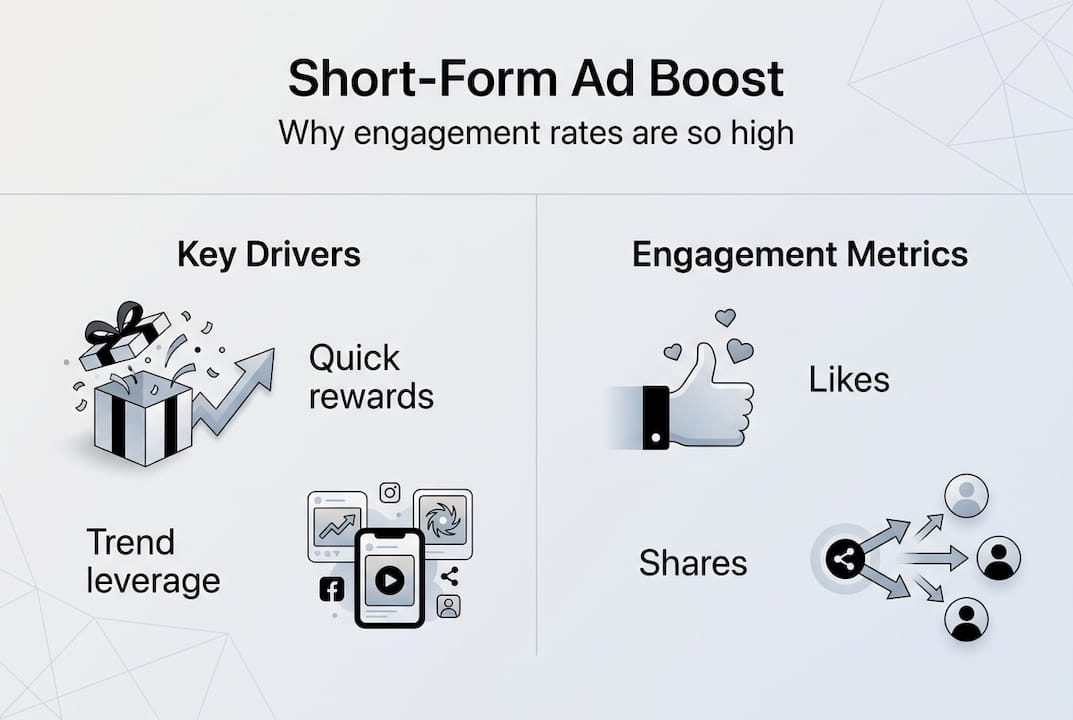
The format comparison reveals stark differences in performance:
| Format Type | Ad Recall Lift | Engagement Rate | Best Use Case |
|---|---|---|---|
| Native short-form | 2-4x baseline | High | Brand awareness, product discovery |
| Traditional video | Baseline | Moderate | Detailed explanations, high-consideration |
| Trending short-form | 3-5x baseline | Very high | Viral potential, physical products |
| Non-trending short-form | 1.5-2x baseline | Moderate-high | Evergreen content, niche audiences |
Physical product categories benefit most from trend integration. Clothing, accessories, beauty items, and home goods naturally fit trending formats because viewers can immediately visualize themselves using these products. Digital products and services require more creative approaches to leverage trends effectively.
Follow this systematic approach to optimize your short-form ad formats:
- Monitor trending audio, hashtags, and challenges weekly on your target platforms using native discovery tools
- Evaluate which trends align naturally with your product benefits and brand voice
- Adapt trending elements quickly, as most trends peak within 7 to 14 days
- Prioritize native placements over traditional in-feed ads to maximize recall and reduce cost per impression
- Highlight key product features within the first five seconds using visual demonstrations rather than explanations
- Include clear calls to action that match platform conventions, like “link in bio” or swipe-up gestures
- Track performance metrics daily and shift budget toward top-performing trend integrations
- Retire trending content once engagement drops below your baseline to avoid appearing outdated
Different platforms reward different trend approaches. TikTok favors audio-driven trends and challenge participation. Instagram Reels responds well to visual effects and editing techniques. YouTube Shorts performs best with content that balances entertainment and information. Understanding these nuances allows you to customize creative for each platform while maintaining consistent messaging.
The interactive elements available in short-form formats create additional engagement opportunities. Polls, questions, and clickable product tags transform passive viewing into active participation. These features work especially well for UGC video formats that encourage viewer response and community building.
Timing matters critically for trend leverage. Jumping on a trend too early means limited audience awareness. Joining too late makes your brand appear behind the curve. The optimal window typically occurs when a trend shows strong growth but has not yet saturated your target audience feeds. Analytics tools can help identify this inflection point.
Consider how e-commerce video ad formats have evolved to incorporate trending elements while maintaining clear product focus. The most successful campaigns blend entertainment value with purchase intent, creating content viewers want to watch and share while driving measurable sales results.
When to avoid short-form ads and strategies for sustained success
Short-form videos are not universal solutions. Products priced above $150 typically require more detailed storytelling than 30 seconds allows. High-consideration purchases like electronics, furniture, or luxury items benefit from longer formats that address objections, demonstrate features thoroughly, and build trust through comprehensive information.
Creative fatigue represents another critical limitation. Audiences tire of repeated creative executions faster in short-form environments because they consume more content per session. What works brilliantly for two weeks may become invisible or annoying by week three. Frequent creative refreshes combat this decline, but they demand significant production resources.
Measurement sophistication separates successful campaigns from wasteful spending. Raw view counts tell incomplete stories. Advanced metrics like Average Percent Viewed reveal whether viewers watch your entire message or bounce after two seconds. Retention curves show exactly where interest drops, enabling precise creative optimization.
Monitor these key performance indicators:
| Metric | What It Measures | Benchmark Target | Refresh Trigger |
|---|---|---|---|
| Views | Reach and distribution | Platform dependent | N/A |
| Average Percent Viewed | Content engagement depth | 60%+ for 15s videos | Below 40% |
| Retention at 3s | Hook effectiveness | 80%+ | Below 60% |
| Click-through rate | Purchase intent | 2-5% for e-commerce | Below 1.5% |
| Cost per acquisition | Campaign efficiency | Product margin dependent | 20% above target |
The refresh interval depends on multiple factors including audience size, budget, and creative variety. Small audiences exhaust creative faster than large ones. Higher budgets accelerate fatigue through increased frequency. Limited creative variations force faster rotation.
A practical refresh schedule for most e-commerce campaigns:
- High-performing ads: Refresh every 10 to 14 days or when engagement drops 30% from peak
- Medium-performing ads: Test variations at 7 days, retire if no improvement
- Low-performing ads: Replace within 3 to 5 days to avoid wasting budget
- Seasonal or event-driven ads: Retire immediately when relevance expires
Pro Tip: Build a creative library with multiple variations of hooks, product demonstrations, and calls to action. This allows rapid assembly of fresh combinations without starting from scratch each cycle. Test different authenticity levels, spokesperson styles, and benefit emphasis to identify what resonates with your specific audience. Track video ad engagement results systematically to build institutional knowledge about your creative performance patterns.
Combining short-form with longer content creates strategic synergy. Use short-form ads for top-of-funnel awareness and interest generation. Direct engaged viewers to longer-form content, landing pages, or product demos for consideration and conversion. This funnel approach maximizes the strengths of each format while minimizing their weaknesses.
Some product categories naturally suit hybrid approaches. Complex software benefits from short-form teasers highlighting key benefits, followed by detailed tutorial videos for serious prospects. Fashion brands can showcase outfit inspiration in short clips while providing styling guides and size information through longer content.
The creative fatigue challenge intensifies as you scale campaigns. What works for a $1,000 monthly budget may collapse at $10,000 because audience overlap increases dramatically. Planning for scale requires building creative production systems that generate fresh content consistently without proportional cost increases.
Consider the total cost of ownership for short-form campaigns. Production costs may seem low initially, but frequent refreshes multiply expenses quickly. Factor in creative development time, approval cycles, platform optimization, and performance monitoring when calculating true campaign costs. Sometimes a higher-quality creative that performs longer delivers better ROI than cheaper options requiring constant replacement.
Enhance your short-form video ads with HotUGC
Implementing these short-form video strategies requires consistent creative production at scale. HotUGC streamlines this process through AI-generated user-generated content videos designed specifically for social media advertising success. The platform produces authentic, trustworthy video ads that incorporate the psychological triggers and content characteristics proven to drive engagement and conversions.
E-commerce marketers using HotUGC AI-generated UGC videos can rapidly test different authenticity levels, trending elements, and format variations without the traditional costs and delays of creator partnerships or in-house production. The platform enables frequent creative refreshes to combat fatigue while maintaining the genuine feel that audiences expect from effective short-form content. Generate multiple video variations quickly, track performance metrics, and iterate based on real data rather than assumptions.
Frequently asked questions
Why do short-form videos generate higher engagement than traditional ads?
Short-form videos trigger dopamine responses through rapid rewards and sensory stimulation, matching the eight second attention span of modern audiences. They deliver complete narratives quickly, satisfying the brain’s craving for instant gratification while minimizing viewer effort.
What content characteristics matter most for short-form ad effectiveness?
Trustworthiness, expertise, and attractiveness drive purchase intent most strongly. Authenticity and brand heritage show U-shaped relationships where moderate levels perform best, avoiding both overly corporate and excessively casual extremes that reduce credibility.
How do trending elements improve short-form ad performance?
Trending music, hashtags, and challenges boost engagement metrics including likes, comments, and shares by riding existing audience interest waves. Native short-form placements amplify this effect with 2 to 4 times better ad recall than traditional video formats.
When should I avoid using short-form video ads?
Products priced above $150 typically need longer formats for detailed explanations and objection handling. High-consideration purchases benefit from comprehensive storytelling that short-form constraints cannot accommodate effectively without sacrificing conversion rates.
How often should I refresh short-form ad creative?
Refresh high-performing ads every 10 to 14 days or when engagement drops 30% from peak levels. Creative fatigue accelerates in short-form environments because audiences consume more content per session, requiring more frequent updates than traditional advertising formats.
What metrics should I track beyond view counts?
Average Percent Viewed reveals actual engagement depth, while retention curves show exactly where viewers lose interest. Track click-through rates, cost per acquisition, and retention at three seconds to understand hook effectiveness and optimize creative elements systematically.


