
What is AI video creation for ecommerce marketers
HotUGC
March 21, 2026 · 12 min read
What is AI video creation for ecommerce marketers

AI video ads are transforming ecommerce advertising performance. Recent data shows AI-generated videos boost conversion rates by 63% compared to static images while cutting production costs from thousands of dollars to just $5 per video. Traditional video creation takes days or weeks, but AI video platforms deliver professional content in under 30 minutes. For marketing managers seeking scalable, cost-effective video advertising solutions, AI video creation offers a powerful alternative to conventional production methods. This guide explains what AI video creation is, how it works, and how to leverage it for better ecommerce marketing outcomes.
Table of Contents
- Key takeaways
- What is AI video creation and how does it work?
- Benefits of AI video creation for ecommerce marketing
- How to integrate AI video creation into your ecommerce marketing strategy
- Common misconceptions and expert insights on AI video creation
- Unlock faster, more affordable video ads for your ecommerce brand
- Frequently asked questions
Key Takeaways
| Point | Details |
|---|---|
| Conversion uplift | AI video ads boost conversions by 63 percent versus static images. |
| CTR uplift | AI video ads deliver approximately 133 percent higher click through rates than static image ads. |
| Speed and cost | Production time shrinks from days to under 30 minutes and costs fall to about five dollars per video. |
| Variations at scale | Marketers can generate dozens of video variations in an afternoon for rapid, data driven optimization. |
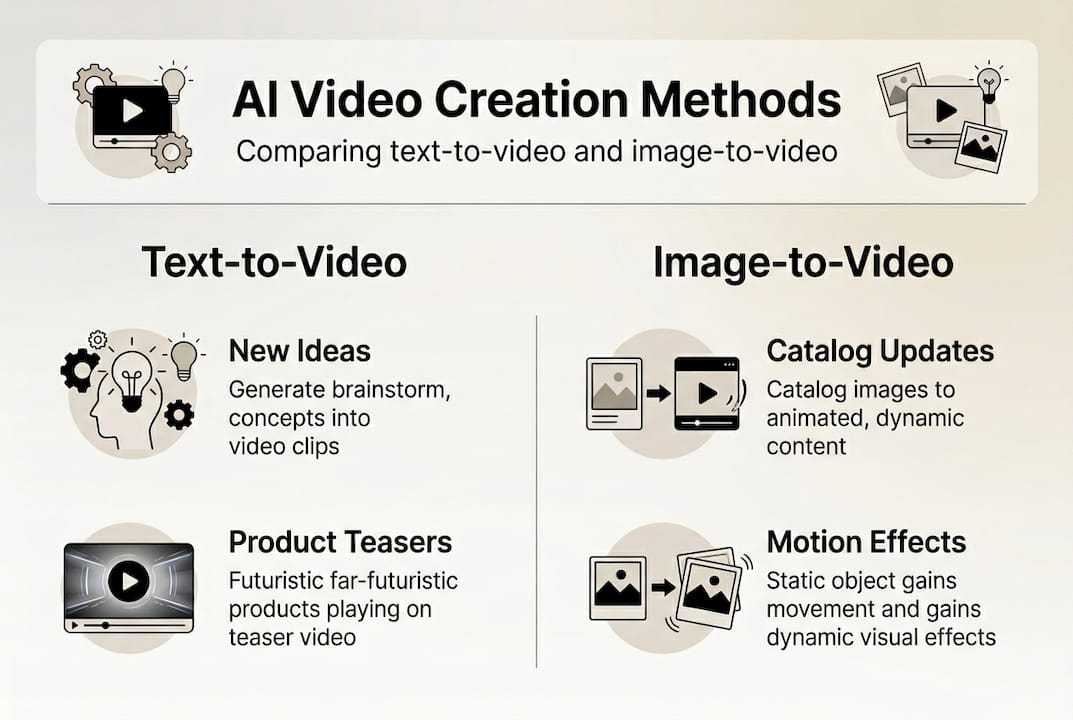
| Technique variety | Text to video creates new concepts from scripts while image to video animates existing photos or footage. |
What is AI video creation and how does it work?
AI video creation refers to automated video generation using machine learning models that transform text descriptions, images, or existing footage into polished video content without manual filming or editing. This technology enables marketing teams to produce professional video advertisements at scale, eliminating the traditional bottlenecks of hiring creators, coordinating shoots, and lengthy post-production workflows.
The core technologies powering AI video creation include text-to-video and image-to-video generation. Text-to-video systems accept written scripts or product descriptions and synthesize complete video sequences featuring realistic avatars, animations, and visual effects. Image-to-video methods animate static product photos or existing footage, adding motion, transitions, and dynamic elements that capture viewer attention.
Behind these capabilities lie sophisticated machine learning architectures. Causal autoregressive models enable real-time video generation suitable for streaming and interactive applications, while variational inference techniques allow multi-control generation where marketers specify both text descriptions and visual trajectories. Model distillation compresses complex AI systems into faster versions that render videos in seconds rather than minutes, making scalable production practical for high-volume campaigns.
For ecommerce applications, these methods dramatically reduce dependence on lengthy manual production processes. Marketing managers can iterate video concepts rapidly, testing different messaging, visual styles, and calls to action without the cost and delay of traditional reshoots. Platforms like AI avatars for UGC videos leverage these technologies to create authentic-looking product reviews and testimonials that resonate with social media audiences.
Pro Tip: Choose text-to-video generation when creating entirely new video concepts from scratch, and use image-to-video methods when you have existing product photography or brand assets you want to animate and repurpose. This strategic approach maximizes both creative flexibility and asset efficiency.
The practical impact for marketing teams is profound. Instead of waiting weeks for a production agency to deliver one video, you can generate dozens of variations in an afternoon. This velocity enables data-driven optimization, where you test multiple video approaches and double down on what performs best, a workflow impossible with traditional video production economics.
Benefits of AI video creation for ecommerce marketing
The performance advantages of AI-generated video ads over traditional formats are substantial and well-documented. Ecommerce brands using AI video ads report 133% higher click-through rates compared to static image ads, alongside 63% conversion rate increases and 259% longer time on page. These metrics translate directly to lower customer acquisition costs and higher return on ad spend.
Shopify merchants specifically have documented a 34% conversion rate lift when replacing static product images with AI-generated video content. The dynamic nature of video captures attention in crowded social media feeds where static content gets scrolled past. Movement, facial expressions from AI avatars, and storytelling elements create emotional connections that drive purchase decisions.
Cost and time savings represent equally compelling advantages. Traditional video production costs average $4,000 per finished minute and requires days or weeks from concept to delivery. AI video platforms produce comparable quality content for approximately $5 per video in under 30 minutes. This 800x cost reduction and 100x speed improvement fundamentally changes what’s economically viable for video advertising.

| Metric | AI Video Ads | Static Image Ads | Traditional Video |
|---|---|---|---|
| Click-through rate | +133% vs static | Baseline | +85% vs static |
| Conversion rate | +63% vs static | Baseline | +45% vs static |
| Production time | 30 minutes | 15 minutes | 3-14 days |
| Production cost | $5 per video | $0-50 | $4,000 per minute |
| Time on page | +259% vs static | Baseline | +180% vs static |
The adoption statistics validate these benefits. Approximately 78% of marketing teams now incorporate AI video tools into their workflows, recognizing the competitive advantage these capabilities provide. Early adopters gain market share while competitors struggle with traditional production constraints.
These improvements directly support core marketing objectives. Higher click-through rates reduce cost per click in paid advertising campaigns. Increased conversion rates lower customer acquisition costs and improve return on ad spend. Faster production enables personalized video content for different audience segments, product categories, and seasonal campaigns. The cumulative effect transforms video from an occasional premium tactic into an everyday workhorse for ecommerce marketing.
How to integrate AI video creation into your ecommerce marketing strategy
Successfully implementing AI video creation requires strategic planning beyond simply adopting new tools. Follow these steps to maximize results and avoid common pitfalls that limit effectiveness.
-
Audit your current video needs and gaps. Identify which product categories, campaign types, and marketing channels would benefit most from increased video content. Prioritize areas where you currently use static images due to video production constraints.
-
Select AI video tools matching your specific requirements. Evaluate platforms based on avatar quality, customization options, output formats, and integration capabilities with your existing marketing stack. Test multiple options with real product content before committing.
-
Develop video content templates for common use cases. Create standardized frameworks for product demonstrations, customer testimonials, feature highlights, and promotional announcements. Templates accelerate production while maintaining brand consistency.
-
Optimize video specifications for each platform. Instagram Reels require 9:16 vertical format under 90 seconds, while Facebook feeds perform better with square 1:1 videos under 60 seconds. TikTok favors authentic UGC styles with trending audio elements. Match your AI video output to platform requirements.
-
Incorporate user-generated content aesthetics. AI-generated videos styled to look like authentic customer reviews and testimonials significantly outperform polished corporate content on social platforms. Leverage video content best practices to strike the right balance between professional quality and authentic feel.
-
Establish rapid iteration workflows. Create multiple video variations testing different hooks, product angles, calls to action, and visual styles. Use A/B testing to identify top performers, then generate additional variations of winning concepts.
-
Distribute strategically across channels. Deploy AI videos in paid social advertising, organic social posts, email marketing, product pages, and retargeting campaigns. Each touchpoint reinforces messaging and provides additional conversion opportunities.
-
Monitor performance metrics continuously. Track view-through rates, click-through rates, conversion rates, and cost per acquisition for each video. Compare AI video performance against your previous static or traditional video benchmarks to quantify impact.
Pro Tip: Experiment with AI avatar customization and animation features to create distinctive brand personalities that increase viewer engagement and recognition. Consistent avatar use across campaigns builds familiarity while maintaining production speed advantages.
The workflow transformation matters as much as the technology itself. Traditional video production creates bottlenecks where creative teams wait days for assets, limiting agility. AI video creation enables same-day campaign launches and real-time optimization based on early performance data. This responsiveness provides competitive advantages in fast-moving ecommerce markets.
Understanding why to automate video ads helps frame AI video creation as part of broader marketing automation strategy rather than an isolated tactic. The goal is systematic, scalable video production that matches the velocity of modern digital marketing.
Common misconceptions and expert insights on AI video creation
Several myths about AI video creation persist among marketing managers, often preventing teams from fully leveraging the technology’s capabilities. Understanding the reality behind these misconceptions enables more effective implementation.
The most common misconception is that AI-generated videos look obviously artificial or low quality. Modern AI video platforms produce content indistinguishable from traditionally filmed footage to most viewers. Avatar realism, lip-sync accuracy, and natural movements have improved dramatically. The quality gap that existed two years ago has largely closed.
Another frequent concern is limited customization, with marketers assuming AI videos follow rigid templates. In reality, advanced platforms offer extensive control over avatars, backgrounds, scripts, pacing, visual effects, and branding elements. You can create videos that precisely match your brand guidelines and campaign requirements.
Some managers believe AI video creation only suits simple product demonstrations or basic ads. However, the technology handles complex storytelling, multi-scene narratives, emotional testimonials, and sophisticated marketing concepts. The limitation is typically creative vision rather than technical capability.
| AI Video Method | Primary Strength | Ideal Use Case | Current Limitation |
|---|---|---|---|
| Text-to-video | Creates entirely new content from descriptions | New product launches, concept testing | Requires detailed prompts for best results |
| Image-to-video | Animates existing assets efficiently | Product photography animation, asset repurposing | Depends on source image quality |
| Causal autoregressive models | Real-time generation and streaming | Interactive experiences, live personalization | Higher computational requirements |
| Variational inference | Multi-control with text and trajectories | Complex scenes with specific movements | Steeper learning curve for non-technical users |
| Model distillation | Fastest rendering speeds | High-volume production, rapid iteration | May sacrifice some quality for speed |
Expert-level AI techniques provide nuanced approaches to different video creation challenges. Text-to-video excels for scratch generation when you’re creating entirely new concepts, while image-to-video suits animation of existing product photos. Causal autoregressive models enable real-time streaming applications, and variational inference allows multi-control where you specify both text descriptions and visual trajectories. Model distillation prioritizes speed for high-volume production scenarios.
Common pitfalls include neglecting script quality, underestimating the importance of hooks in the first three seconds, failing to test multiple variations, and not optimizing videos for mobile viewing. Many marketers also miss the opportunity to repurpose successful AI videos across multiple channels and campaigns, leaving value on the table.
The complete AI video ads guide addresses these nuances in depth, helping teams avoid expensive mistakes and accelerate results. The key is recognizing AI video creation as a sophisticated tool requiring strategic application, not a magic button that automatically produces perfect content.
Realistic expectations matter. AI video creation won’t replace all traditional video production, particularly for high-budget brand campaigns requiring celebrity talent or complex physical sets. However, for the 80% of video needs focused on product marketing, social advertising, and performance campaigns, AI delivers superior economics and speed without meaningful quality compromise.
Unlock faster, more affordable video ads for your ecommerce brand
You’ve seen how AI video creation transforms ecommerce marketing with 63% higher conversions, 133% better click-through rates, and 800x cost reductions compared to traditional production. The question isn’t whether to adopt AI video, but how quickly you can implement it to gain competitive advantage.

HotUGC eliminates the traditional barriers to professional video advertising. Our AI-driven platform generates authentic UGC-style product review videos in minutes, featuring realistic avatars, conversion-optimized scripts, and attention-grabbing hooks that stop the scroll. You get commercial rights for all videos, multi-language support for global campaigns, and complete customization to match your brand identity. While competitors wait weeks for traditional video production, you can launch, test, and optimize multiple video campaigns in a single afternoon. The platform handles everything from script generation to final rendering, letting you focus on strategy rather than production logistics. For ecommerce brands serious about scaling video advertising without scaling costs, HotUGC provides the speed, quality, and economics that modern performance marketing demands.
Frequently asked questions
What is AI video creation?
AI video creation uses machine learning models to automatically generate video content from text descriptions, images, or existing footage without manual filming or editing. The technology produces professional-quality videos featuring realistic avatars, animations, and effects in minutes rather than the days or weeks required for traditional production.
What types of AI-generated videos work best for ecommerce ads?
User-generated content style videos featuring authentic product reviews and testimonials perform exceptionally well on social platforms like TikTok, Instagram, and Facebook. Product demonstration videos, feature highlights, unboxing experiences, and comparison videos also drive strong engagement and conversions when created with AI tools optimized for ecommerce marketing.
How much does AI video creation cost compared to traditional video production?
AI video platforms typically cost $5 to $50 per video depending on features and customization, compared to traditional video production averaging $4,000 per finished minute. This represents an 800x cost reduction that makes video advertising economically viable for brands of all sizes, enabling extensive testing and personalization previously impossible.
Can AI-generated videos actually boost conversion rates?
Yes, documented performance data shows AI video ads increase conversion rates by 63% compared to static images, with Shopify merchants reporting 34% conversion lifts specifically. The dynamic nature of video captures attention better than static content, while storytelling elements and avatar presentations create emotional connections that drive purchase decisions.
How long does it take to create videos with AI platforms?
Most AI video platforms generate finished videos in 15 to 30 minutes from initial concept to final output. This includes script generation, avatar selection, visual customization, and rendering. Advanced platforms with model distillation technology can produce videos even faster, enabling same-day campaign launches and rapid iteration based on performance data.
Do AI-generated videos look artificial or low quality?
Modern AI video platforms produce content with realistic avatars, natural movements, and accurate lip-sync that most viewers cannot distinguish from traditionally filmed footage. Quality has improved dramatically over the past two years as underlying machine learning models have advanced. The key is selecting reputable platforms that prioritize realism and offer sufficient customization to match your brand standards.


