
Essential Steps for Powerful Social Media Video Marketing
HotUGC
March 31, 2026 · 10 min read
Essential Steps for Powerful Social Media Video Marketing

If your video ads aren’t driving sales after the first three seconds, you’re likely missing critical steps. Most e-commerce brands waste budget on low-converting social video ads because they skip foundational planning or fail to optimize for platform-specific behaviors. This guide walks you through the entire process: setting strategic goals, creating high-impact videos, optimizing for maximum reach, and measuring what matters. You’ll learn repeatable steps that turn underperforming campaigns into consistent revenue drivers across TikTok, Instagram Reels, and YouTube Shorts.
Table of Contents
- What you need before you start: Goals, audience, and platforms
- Step-by-step process: Creating social video ads that convert
- Optimization strategies: Scheduling, boosting, and creative velocity
- Measuring success: Key metrics and interpreting results
- Next-level results: Streamline your social media video workflow
- Frequently asked questions
Key Takeaways
| Point | Details |
|---|---|
| Define goals first | Clear objectives guide every step and optimize conversions. |
| Prioritize short-form video | Videos under 60 seconds on vertical platforms drive purchases fastest. |
| Embrace UGC and batch production | Lo-fi, modular content is fast, effective, and easy to iterate. |
| Track and act on metrics | Regularly review benchmarks like engagement rate and ROAS to adjust strategies. |
| Leverage AI for speed | AI production and analytics tools enable high creative velocity and reduce time to launch. |
What you need before you start: Goals, audience, and platforms
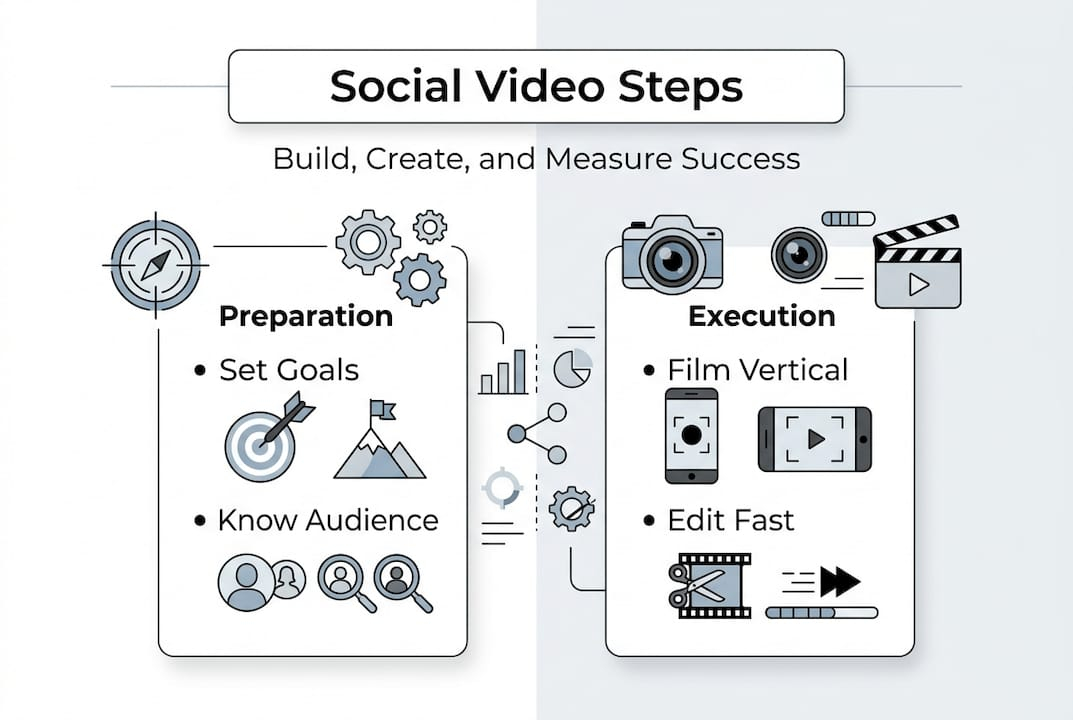
Before you shoot a single frame, clarify your objectives. Are you building awareness, driving engagement, or pushing conversions? Each goal demands different creative approaches and metrics. Set clear goals aligned with funnel stages to ensure your video strategy matches business outcomes.
Next, define your target buyers. Create basic personas that capture demographics, pain points, and platform habits. A Gen Z shopper on TikTok behaves differently than a millennial browsing Instagram Reels. Understanding these nuances shapes everything from script tone to video length.
Select platforms based on where your audience spends time and which formats align with your product. The table below maps platform strengths to common e-commerce goals:
| Platform | Best For | Primary Format | Avg. Engagement |
|---|---|---|---|
| TikTok | Discovery, impulse buys | Vertical 15-60s | 3.7% |
| Instagram Reels | Brand loyalty, lifestyle | Vertical 15-90s | 0.48% |
| YouTube Shorts | Product demos, tutorials | Vertical under 60s | 1.2% |
| Retargeting, older demos | Square or vertical | 0.25% |
Start with one platform to test creative and messaging before scaling cross-channel. This focused approach lets you refine hooks, calls-to-action, and pacing without spreading resources thin. Once you identify winning formulas, adapt them for other platforms.
Pro Tip: Test why short-form video ads work by running identical creative on two platforms simultaneously. Compare engagement rates and cost per acquisition to determine where your audience responds strongest.
Step-by-step process: Creating social video ads that convert
With your objectives, audience, and platforms locked in, follow these essential steps for maximum impact. This seven-step framework mirrors proven video marketing strategy practices that drive measurable results.
1. Plan your content calendar and creative themes
Map out 2-4 weeks of video concepts tied to product launches, seasonal trends, or customer pain points. Batch similar themes together to streamline production. Planning ahead prevents last-minute scrambles and ensures consistent posting schedules.
2. Script for the first three seconds
Your hook determines whether viewers scroll past or stop to watch. Open with a bold claim, surprising statistic, or relatable problem. Avoid generic intros. The must-have video ad features include hooks that grab attention instantly.
3. Shoot vertical, modular assets
Capture footage in 9:16 aspect ratio for mobile-first platforms. Film multiple takes of hooks, product demos, and testimonials. Modular assets let you mix and match elements to create 10+ variations from a single shoot. This approach fuels creative testing without constant reshoots.

4. Edit for sound-off viewing
Add captions, text overlays, and visual cues that communicate your message without audio. Over 85% of social video views happen with sound off, so captions aren’t optional. Use bold fonts and high-contrast colors to ensure readability on small screens.
5. Optimize length and pacing
Keep videos under 60 seconds for maximum retention. Front-load value and product benefits in the first 10 seconds. Trim dead space ruthlessly. Fast cuts and dynamic transitions maintain momentum and prevent drop-off.
6. Add clear calls-to-action
Tell viewers exactly what to do next: swipe up, click the link, use a promo code. Place CTAs both mid-video and at the end. Reinforce urgency with limited-time offers or scarcity messaging. Effective scriptwriting for video ads balances storytelling with direct response elements.
7. Batch-produce creative variations
Shoot multiple hooks, CTAs, and product angles in one session. Combine these elements into 10-15 unique videos. Testing variations reveals which messaging resonates and prevents ad fatigue. Creative velocity separates winning campaigns from stagnant ones.
The table below compares traditional production methods with modern UGC-style approaches:
| Approach | Production Time | Cost per Video | Authenticity | Testing Velocity |
|---|---|---|---|---|
| Polished studio | 2-4 weeks | $2,000-$10,000 | Low | Slow |
| UGC creator network | 1-2 weeks | $200-$1,000 | High | Moderate |
| AI-generated UGC | Minutes | $10-$50 | High | Very fast |
Pro Tip: Test at least 10 creative variations per campaign to identify top performers and avoid ad fatigue. Rotate winning videos every 7-10 days to maintain engagement rates.
Optimization strategies: Scheduling, boosting, and creative velocity
Once your videos are created, the next challenge is to deploy and optimize them efficiently. Strategic scheduling and paid amplification turn good content into revenue-generating assets.
Post during peak engagement windows for your target audience. For e-commerce, this typically means evenings and weekends when shoppers browse casually. Use platform analytics to identify when your followers are most active, then schedule posts 30-60 minutes before those windows.
Cross-promote top-performing organic videos with paid ads. Let organic performance guide your ad spend. Videos with high engagement rates, strong watch time, and positive comments deserve budget allocation. Start with small test budgets, then scale winners aggressively.
Leverage AI tools to maintain creative velocity without burning out your team:
- Automated editing platforms that resize videos for multiple platforms in seconds
- AI scriptwriting tools that generate hooks and CTAs based on product features
- Batch rendering software that processes 20+ video variations overnight
- Performance dashboards that surface winning creative patterns automatically
Modular assets with varying hooks and CTAs let you test messaging without reshooting. Swap out the first three seconds while keeping the product demo identical. This approach isolates what drives performance and accelerates learning.
AI video creation platforms now generate UGC-style videos featuring realistic avatars and conversion-optimized scripts in minutes. These tools eliminate traditional bottlenecks like creator outreach, filming schedules, and editing timelines. For brands running 50+ creative tests monthly, AI for content creation becomes essential infrastructure.
Monitor frequency caps to prevent overexposure. If the same user sees your ad 5+ times without converting, you’re wasting impressions. Refresh creative or adjust targeting before fatigue sets in. The AI video ads guide covers advanced tactics for sustaining performance at scale.
Pro Tip: Use modular assets with varying hooks and CTAs to test 3-5 messaging angles per product. Combine your top-performing hook with your best CTA for maximum conversion rates.
Measuring success: Key metrics and interpreting results
Continuously improving your campaigns means understanding what the metrics really show. Track these essential KPIs to diagnose performance and guide optimization decisions.
Views and reach indicate top-of-funnel awareness. High view counts with low engagement suggest your hook works but your content doesn’t deliver on the promise. Adjust pacing or strengthen your value proposition.
Watch time and retention rate reveal whether viewers stay engaged. If 70% drop off after five seconds, your hook failed. If they watch 50%+ but don’t click, your CTA needs work. Platform analytics show exactly where viewers lose interest.
Engagement rate (likes, comments, shares divided by views) measures resonance. Key benchmarks vary by platform, but TikTok averages 3.7% while Instagram Reels hover around 0.48%. Falling below these thresholds signals creative fatigue or poor targeting.
Click-through rate (CTR) tracks how many viewers take action. E-commerce video ads should achieve 1.2-1.5% CTR. Lower rates indicate weak CTAs or misaligned offers. Test different urgency tactics and benefit statements.
Return on ad spend (ROAS) measures revenue generated per dollar spent. Aim for 3-5x ROAS on social video campaigns. Calculate this by dividing attributed revenue by total ad spend. If ROAS falls below 2x, pause underperformers and reallocate budget to winners.
The table below shows platform-specific benchmarks for e-commerce video ads:
| Metric | TikTok | Instagram Reels | YouTube Shorts | |
|---|---|---|---|---|
| Engagement Rate | 3.7% | 0.48% | 1.2% | 0.25% |
| Avg. CTR | 1.5% | 1.2% | 1.3% | 0.9% |
| Target ROAS | 4-6x | 3-5x | 3-5x | 3-4x |
| Hook Retention | 60%+ | 55%+ | 58%+ | 50%+ |
TikTok engagement rates average 3.7%, significantly outperforming Instagram Reels at 0.48%, making it the top platform for e-commerce discovery campaigns.
When videos underperform, diagnose the issue systematically. Low views suggest targeting or timing problems. High views with low engagement point to creative issues. Strong engagement with weak conversions indicates offer or landing page friction. Understanding video ad engagement metrics helps you pinpoint exactly where to optimize.
Implement a structured video ad workflow that includes weekly performance reviews. Compare new creative against historical benchmarks. Double down on what works and kill what doesn’t within 72 hours.
Next-level results: Streamline your social media video workflow
Ready to put these strategies on autopilot? The biggest bottleneck for most e-commerce brands isn’t strategy, it’s execution speed. Traditional video production takes weeks and costs thousands per asset. That timeline kills creative testing velocity and leaves you stuck running the same ads until performance tanks.

AI-generated UGC videos solve this problem by collapsing production from weeks to minutes. You input product details and brand guidelines, then receive professional UGC-style videos featuring realistic avatars, conversion-optimized scripts, and platform-specific formatting. No filming, no editing, no creator negotiations.
This approach lets you test 20+ creative variations weekly instead of recycling the same three videos for months. You maintain the authenticity and relatability of traditional UGC while achieving the speed and cost efficiency of automation. Commercial rights come standard, so you can deploy videos across all paid and organic channels immediately.
For brands serious about scaling social video performance, AI-driven video creation provides the infrastructure to compete with larger competitors. You gain the creative testing velocity of enterprise brands without the enterprise budget or team size.
Frequently asked questions
What length is best for social media video ads?
Short-form videos under 60 seconds are most effective for e-commerce on TikTok, Reels, and Shorts. 52% of consumers prefer short-form videos for brand interaction, and platforms algorithmically favor this format.
Which social platforms should I focus on for e-commerce video ads?
Prioritize TikTok, Instagram Reels, and YouTube Shorts for impulse-driven e-commerce sales. Short-form vertical content outperforms on these platforms due to mobile-first user behavior and discovery-focused algorithms.
How important are captions for video ads?
Captions are critical since 85% of views are sound-off, especially on social platforms. Captions drive engagement by making content accessible during commutes, in public spaces, and in sound-sensitive environments.
How often should I refresh video creatives?
To avoid ad fatigue, test 10+ variations weekly and monitor performance metrics closely. Creative velocity is key to ongoing social video success, as audiences quickly tire of repetitive messaging.
What is a good ROAS for social media video ads?
Aim for a 3-5x return on ad spend for e-commerce video campaigns. E-commerce ROAS benchmark is 3-5x for social media ads, with top performers achieving 6x+ through rigorous creative testing and audience segmentation.


